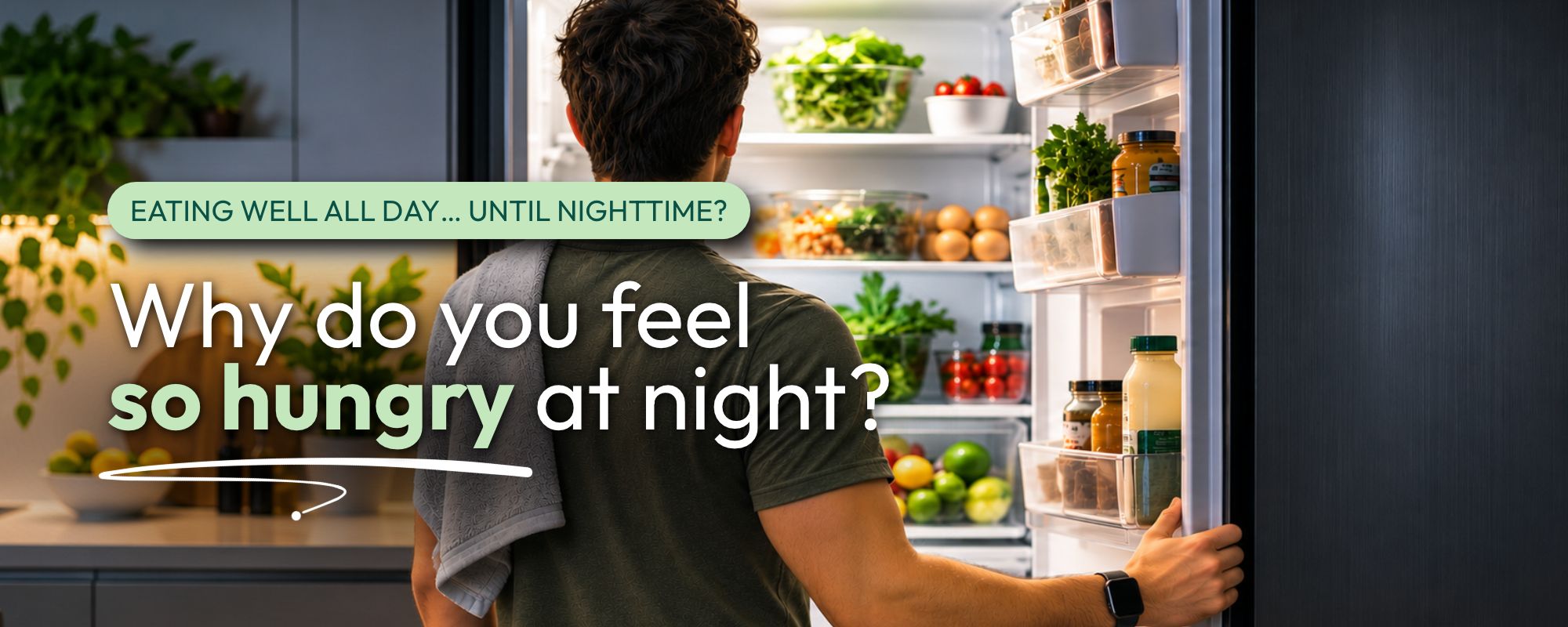
“I’m great all day, but at night I lose control around food.” We hear variations of this frequently. The immediate assumption is often: “I need more willpower.” But before blaming discipline, it is worth looking at what happened during the previous 8–12 hours.
Sometimes what feels like overeating at night is partially driven by something much simpler: Your body may be trying to recover from inadequate energy intake earlier in the day.
Your body keeps track
Imagine this schedule:
- 7:00 AM: Coffee
- 12:30 PM: Salad with chicken
- 3:00 PM: Another coffee
- 5:30 PM: Workout
- 7:00 PM: Arrive home extremely hungry
By evening, cravings feel intense. Dinner becomes difficult to stop eating. Then snacks follow.
The person concludes:
“I have no self-control at night.”
But there is another question worth asking:
Was that body adequately fueled before 7 PM?
Probably not.

Hunger is biology, not a character flaw
Hunger is part of the body’s system for maintaining adequate energy intake. When intake is repeatedly restricted, the drive to eat can become stronger.
This is one reason overly restrictive diets can create a cycle of:
Restriction → intense hunger → overeating → guilt → restriction
The response to overeating is often another attempt to compensate. Breakfast gets skipped the next morning. Carbohydrates are removed. Calories are cut further. An extra workout is added. And the cycle begins again.
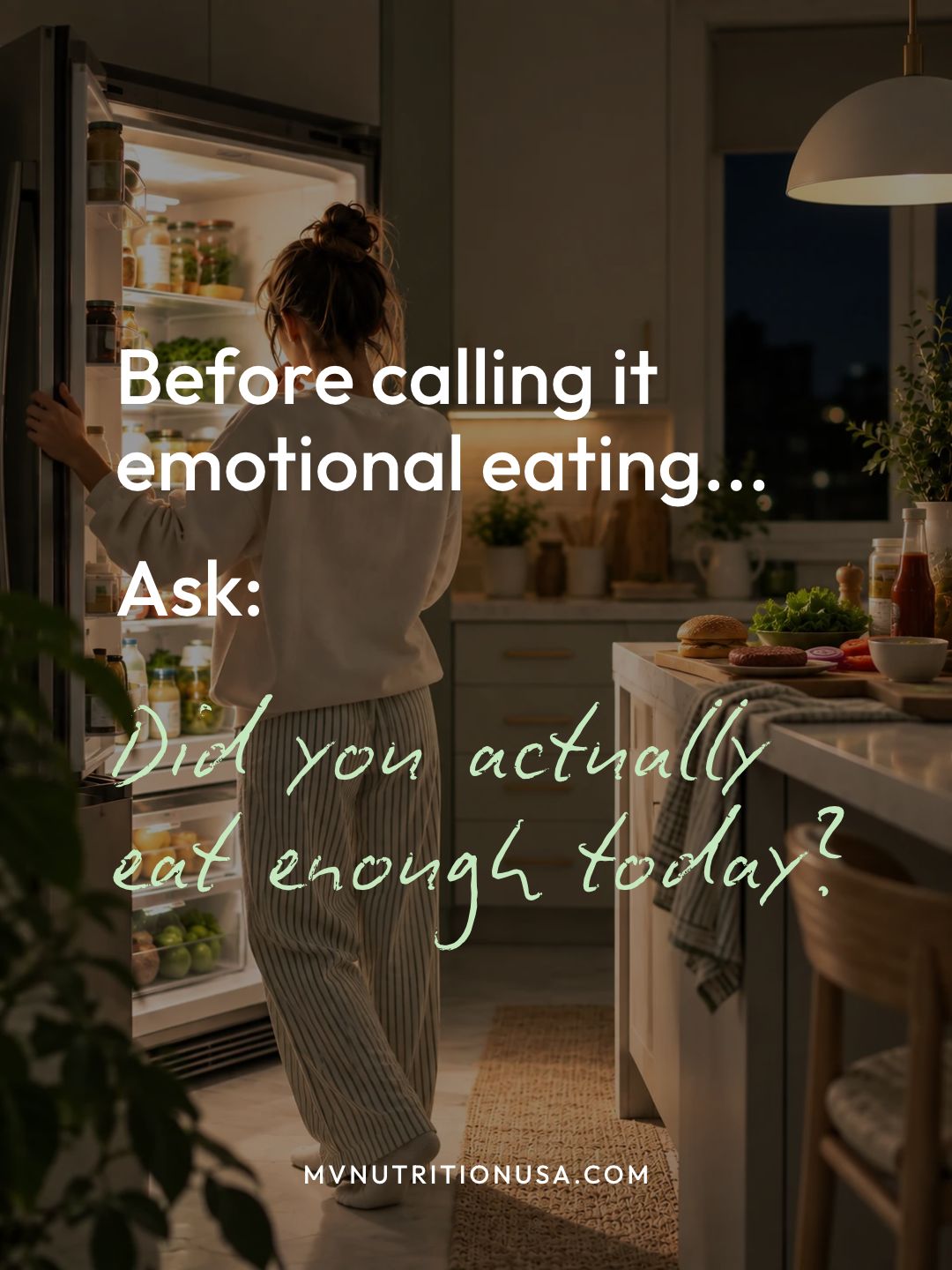
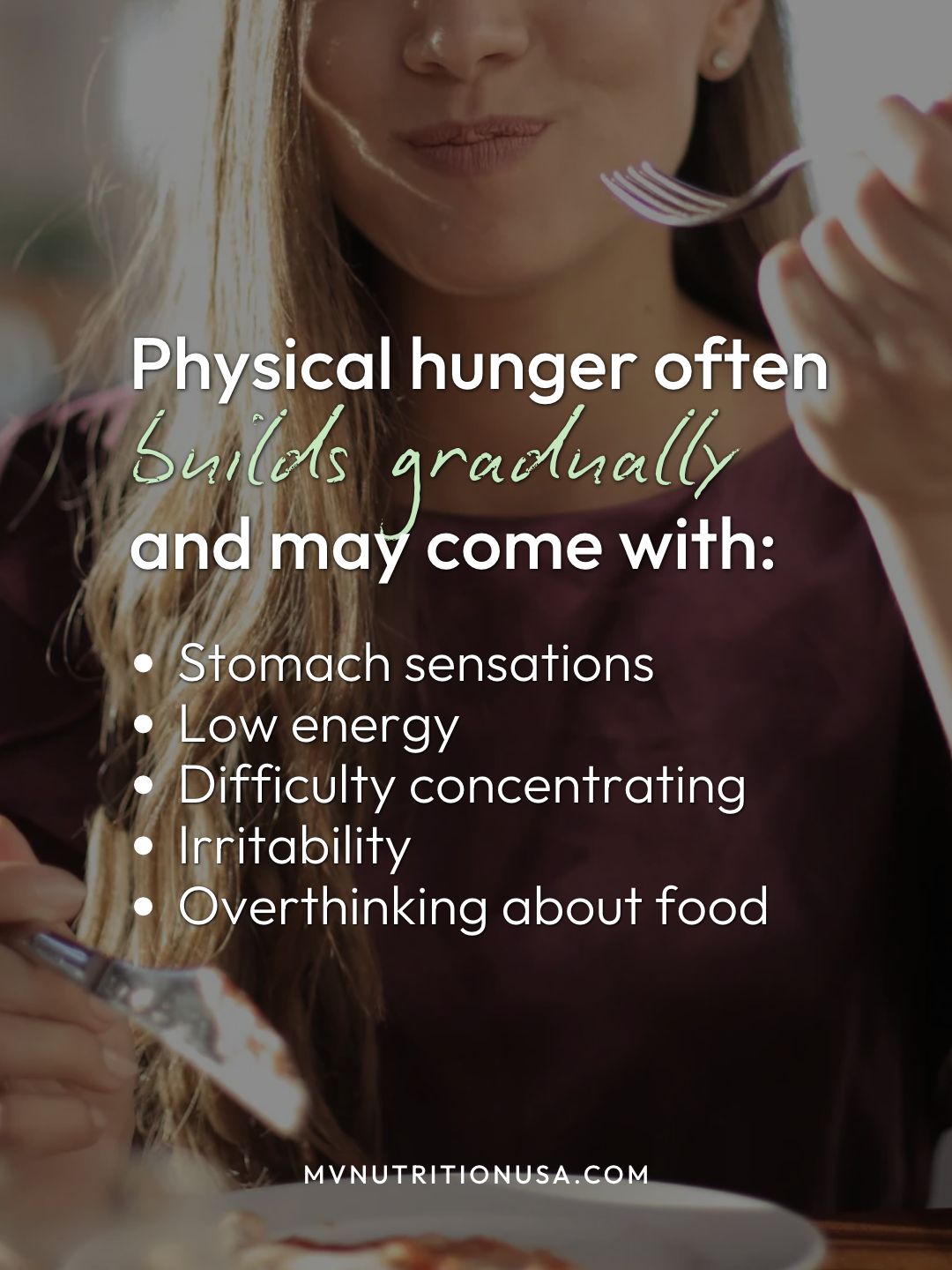
Is it physical hunger or emotional eating?
The answer can be both. Eating behavior is complex. Stress, boredom, emotions, social environments, habits, sleep, food availability, and hunger can all influence how much and why we eat.
Emotional eating is real. But intense biological hunger can easily be mistaken for emotional eating when someone has spent most of the day underfueled.
Before labeling an episode, look backward. Ask:
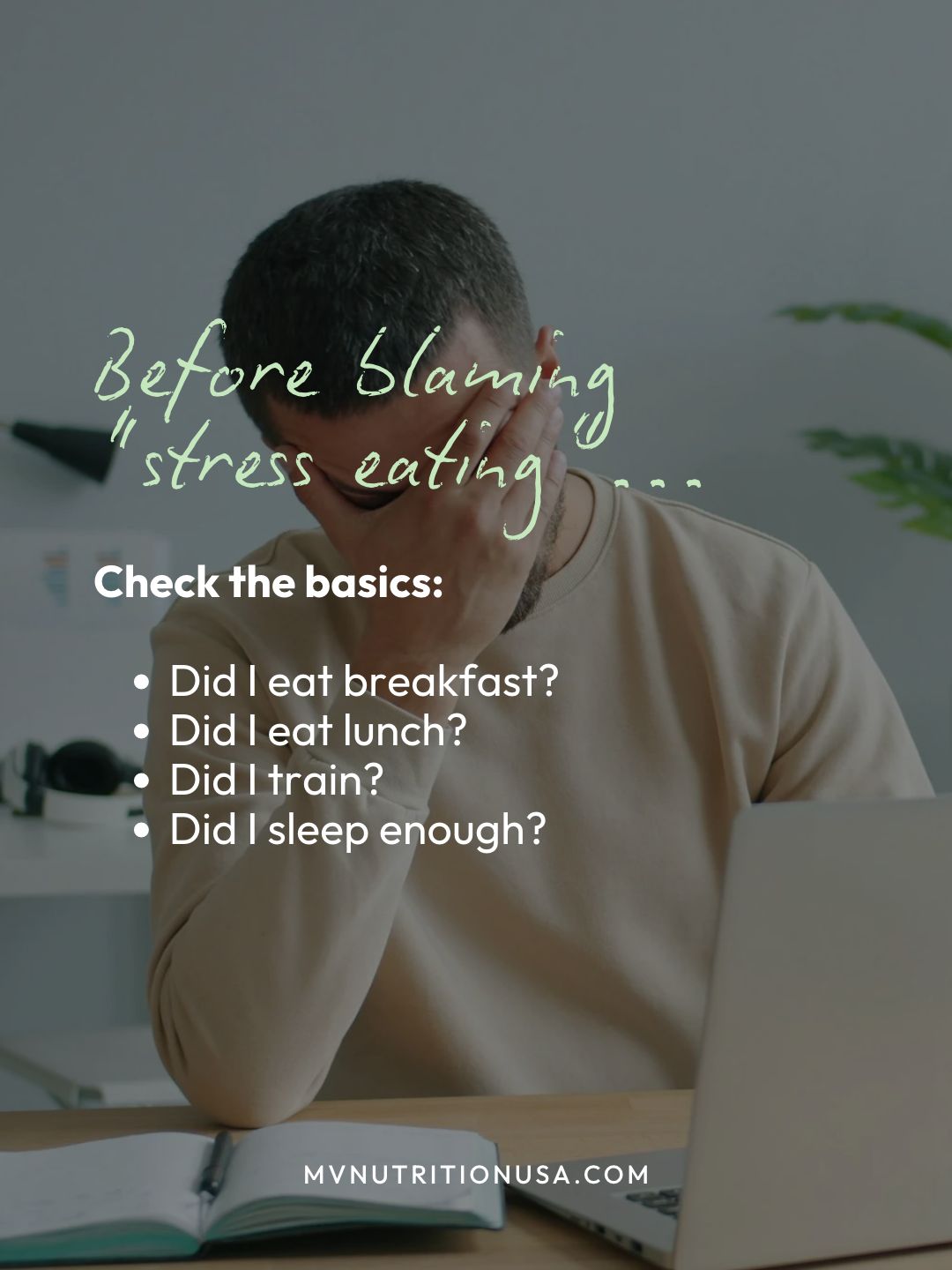
- Did I eat breakfast?
- Was lunch large enough?
- How many hours passed between meals?
- Did I exercise?
- Did I adequately fuel before exercise?
- Did I recover afterward?
- How much sleep did I get?
- Was today unusually stressful?
These questions provide much more useful information than simply asking: “Why can’t I control myself?”
Athletes can be particularly vulnerable
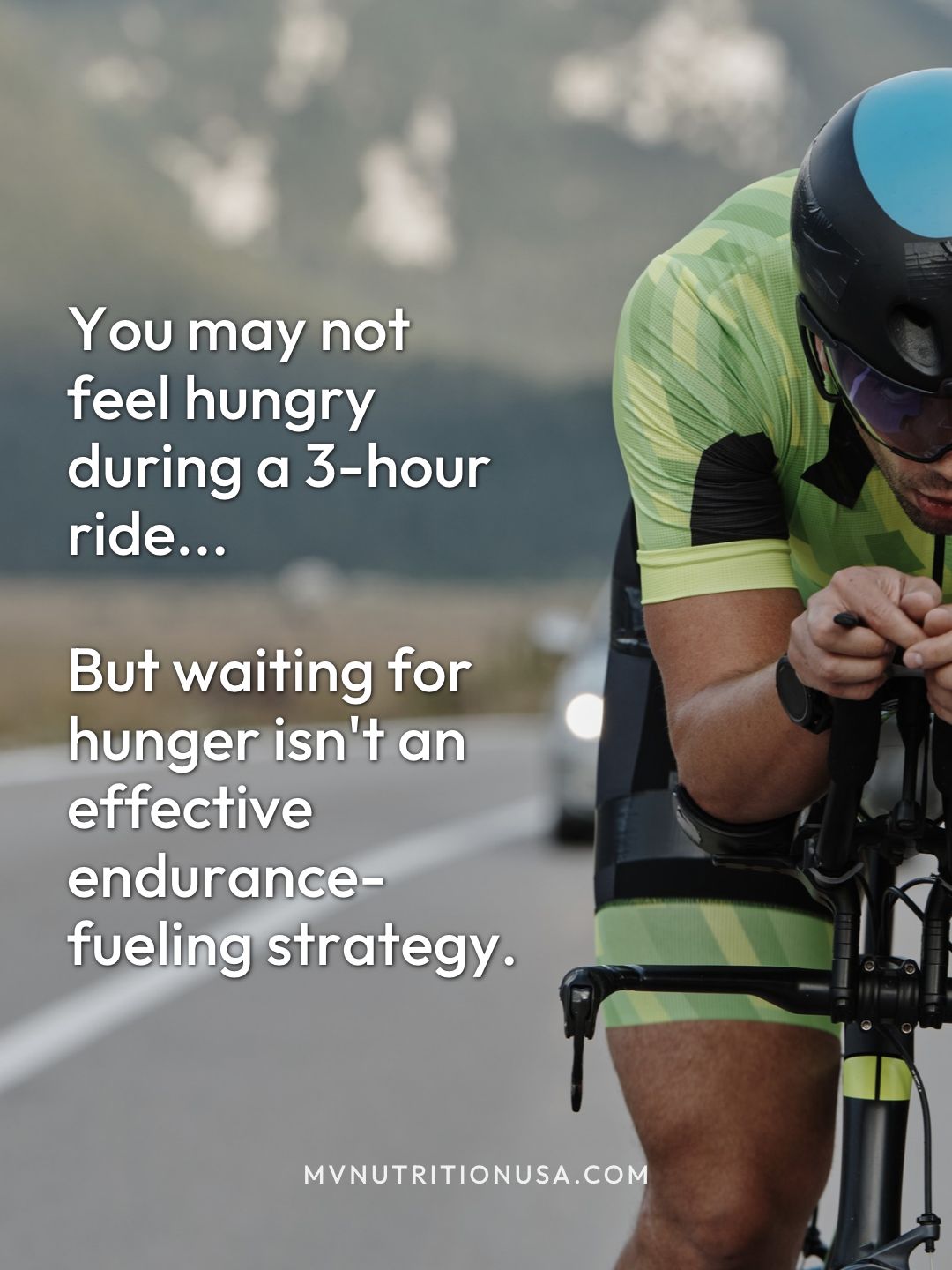
Exercise increases energy expenditure. That seems obvious, yet athletes and active adults frequently increase training without proportionally increasing food intake.
Some forms of exercise can also temporarily suppress appetite. An athlete may finish a hard session without feeling particularly hungry and assume they don’t need to eat.
Several hours later, hunger can become much stronger.
For athletes, planned nutrition can therefore be valuable even when appetite is temporarily low.
Eating more earlier can sometimes help you eat more normally later
For someone caught in a restriction-overeating cycle, the solution may seem counterintuitive. It may involve eating more consistently, not restricting harder.
That could mean:
– Eating breakfast
Instead of relying on coffee until lunch.
– Building a more substantial lunch
Include carbohydrate + protein + fat + produce rather than choosing the smallest possible meal.
– Adding an afternoon snack
Especially when dinner is several hours away.
– Fueling before training
Carbohydrates before exercise can support both training output and energy availability.
– Recovering after training
A combination of carbohydrate and protein can begin the recovery process rather than waiting several hours for the next meal.
What could a better day look like?
Instead of: Coffee → salad → workout → extreme hunger → dinner → uncontrolled snacking.
Consider:

Breakfast:
Greek yogurt + oats + berries + nut butter
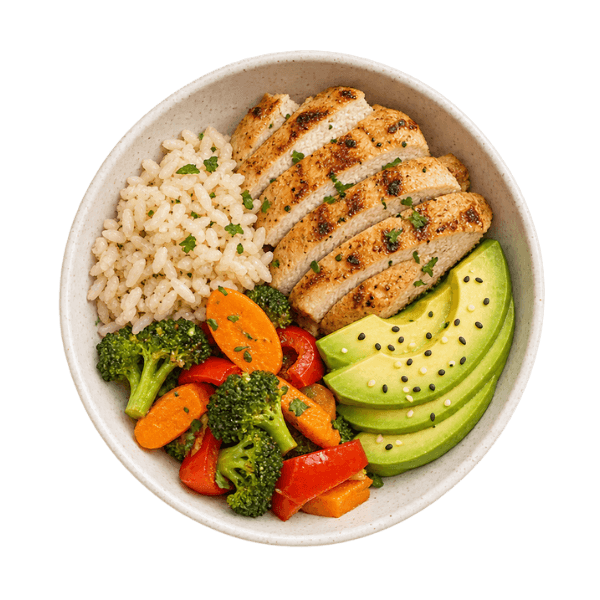
Lunch:
Rice + chicken + vegetables + avocado
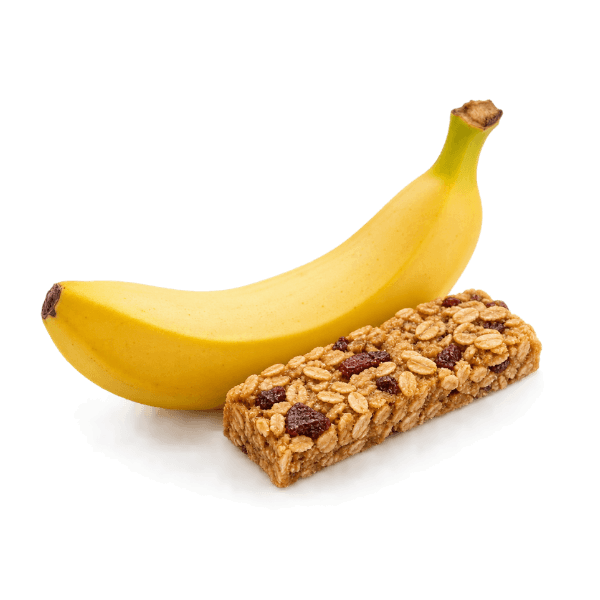
Pre-workout:
Banana + granola bar
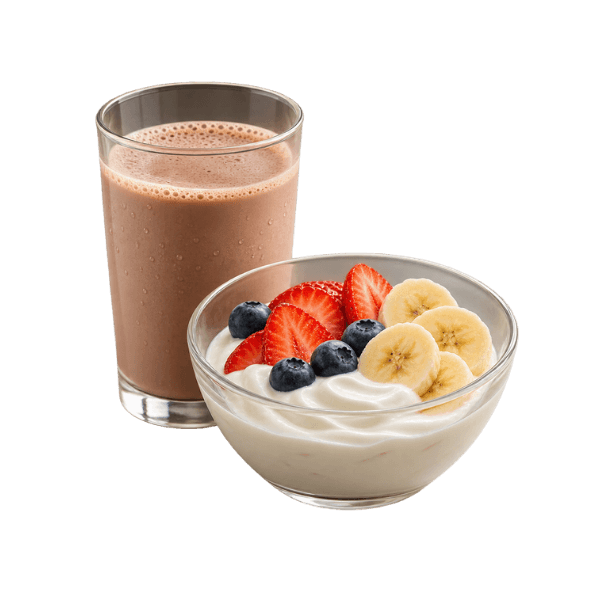
Post-workout:
Chocolate milk or yogurt + fruit
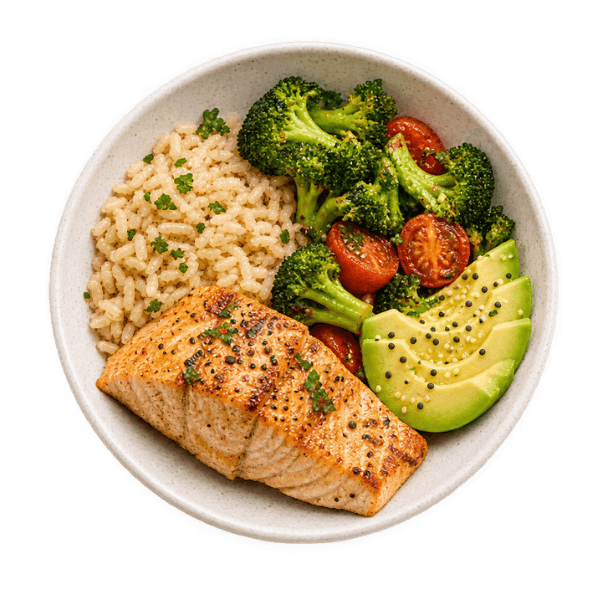
Dinner:
Protein + carbohydrate + vegetables + fat
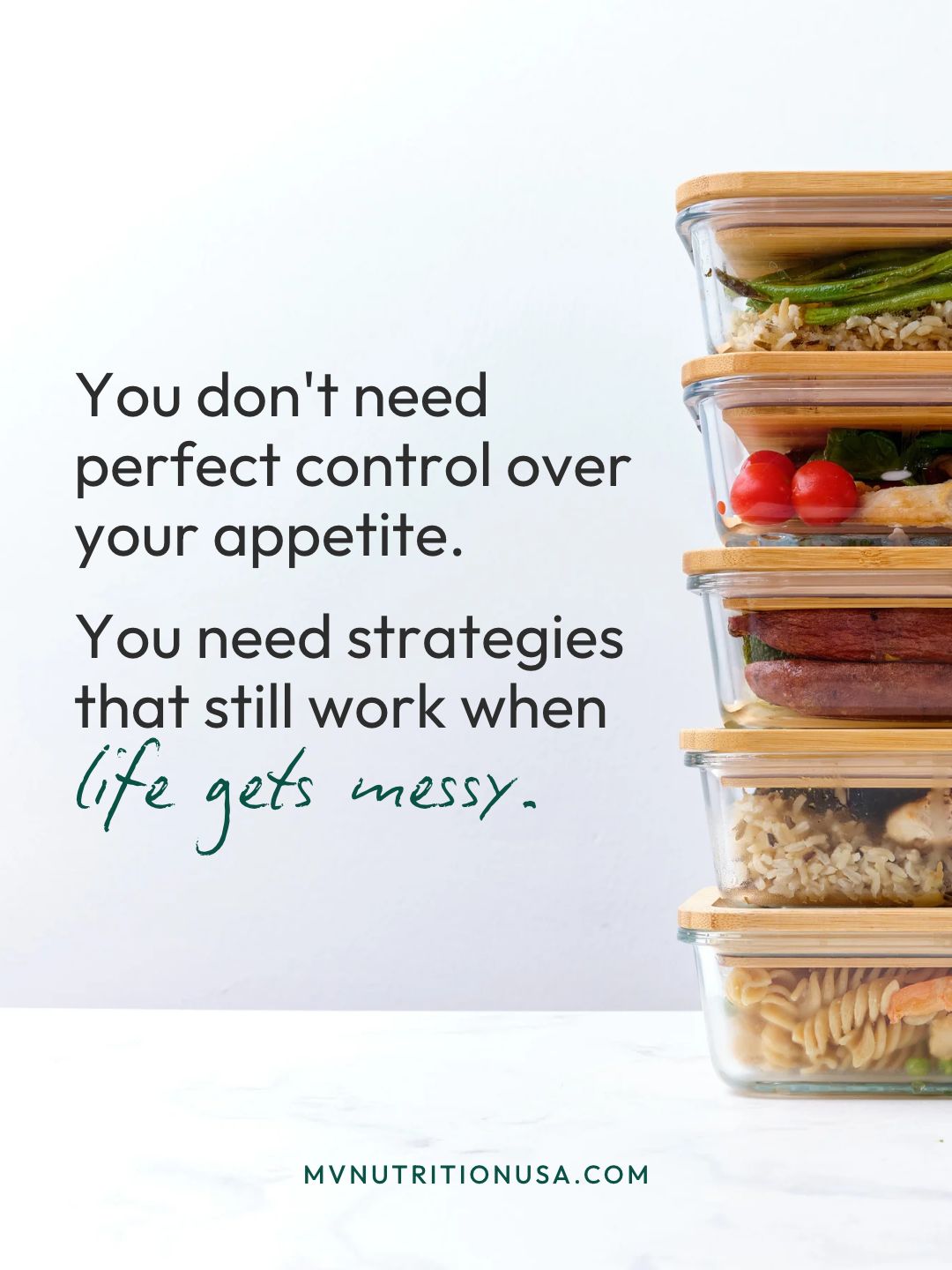
This isn’t about following a perfect menu. It’s about preventing the body from spending the entire day trying to catch up.
What about stress eating?
Regular fueling doesn’t eliminate emotional eating.
Food can provide comfort, and occasionally eating because something tastes good or because you’re celebrating is part of normal eating.
If stress frequently triggers eating that feels distressing or difficult to manage, additional strategies may be useful.
These can include:
- Identifying triggers
- Improving sleep
- Developing stress-management strategies
- Creating more predictable meal patterns
- Removing unnecessary food rules
- Working with an appropriate mental-health professional when needed
Nutrition is one part of the picture.
How MV NUTRITION approaches these cases
At MVNUTRITION, we don’t start by telling someone to “just eat less.” We first try to understand why the eating pattern is happening.
Then we build a strategy around the actual cause. For one person, that may mean a larger breakfast. For another, it may mean fueling before afternoon training. For someone else, it may mean removing unnecessary restrictions that are perpetuating an all-or-nothing relationship with food.
And when eating behaviors indicate that specialized mental-health or eating-disorder care is needed, nutrition care should be coordinated with the appropriate healthcare team.

Stop treating every episode as a failure
If you repeatedly feel out of control around food at night, don’t immediately assume you need more discipline. Look at the entire day. Your evening eating may be telling you something about your morning, your afternoon, your training, your stress—or all of them together.
Instead of asking:
“How can I eat less tonight?”
Sometimes the more useful question is:
“How can I fuel myself better throughout the day?”
If you’re stuck in a cycle of restricting, getting extremely hungry, overeating, and starting over, MV NUTRITION can help identify what’s driving the pattern and build a nutrition strategy that supports your health, performance, and long-term goals.