

Gastrointestinal (GI) distress is one of the most common yet under-addressed barriers to athletic performance. Research shows that 30–70% of endurance athletes experience symptoms such as bloating, cramping, reflux, or diarrhea during training or competition. While often normalized, these symptoms are not something athletes need to “push through.” They are predictable, modifiable, and highly responsive to nutrition strategies.
Why do athletes experience GI Distress?
GI symptoms during exercise are multifactorial, with three primary mechanisms:
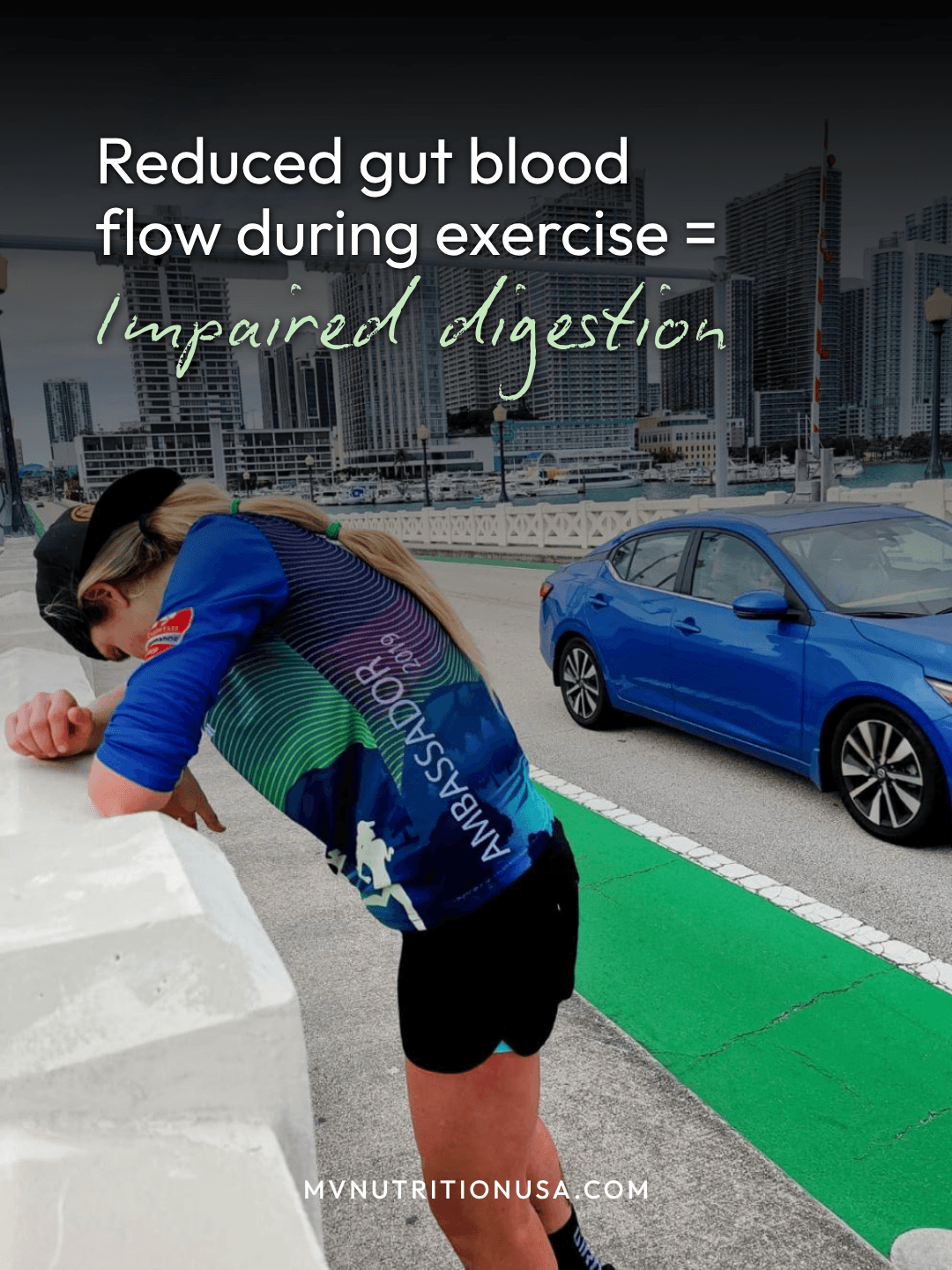
1. Reduced Blood Flow to the Gut
During exercise, blood is redirected from the gastrointestinal tract to working muscles.
This leads to:
- Impaired digestion and absorption
- Increased risk of nausea and cramping
2. Increased Gut Permeability
High-intensity or prolonged exercise can increase intestinal permeability (“leaky gut”), allowing endotoxins to pass into circulation.
This may result in:
- Diarrhea
- Abdominal pain
- Systemic inflammation
3. Nutritional Triggers
Common fueling-related contributors include:
- High fiber or fat intake before exercise
- Highly concentrated carbohydrate solutions (>8–10%)
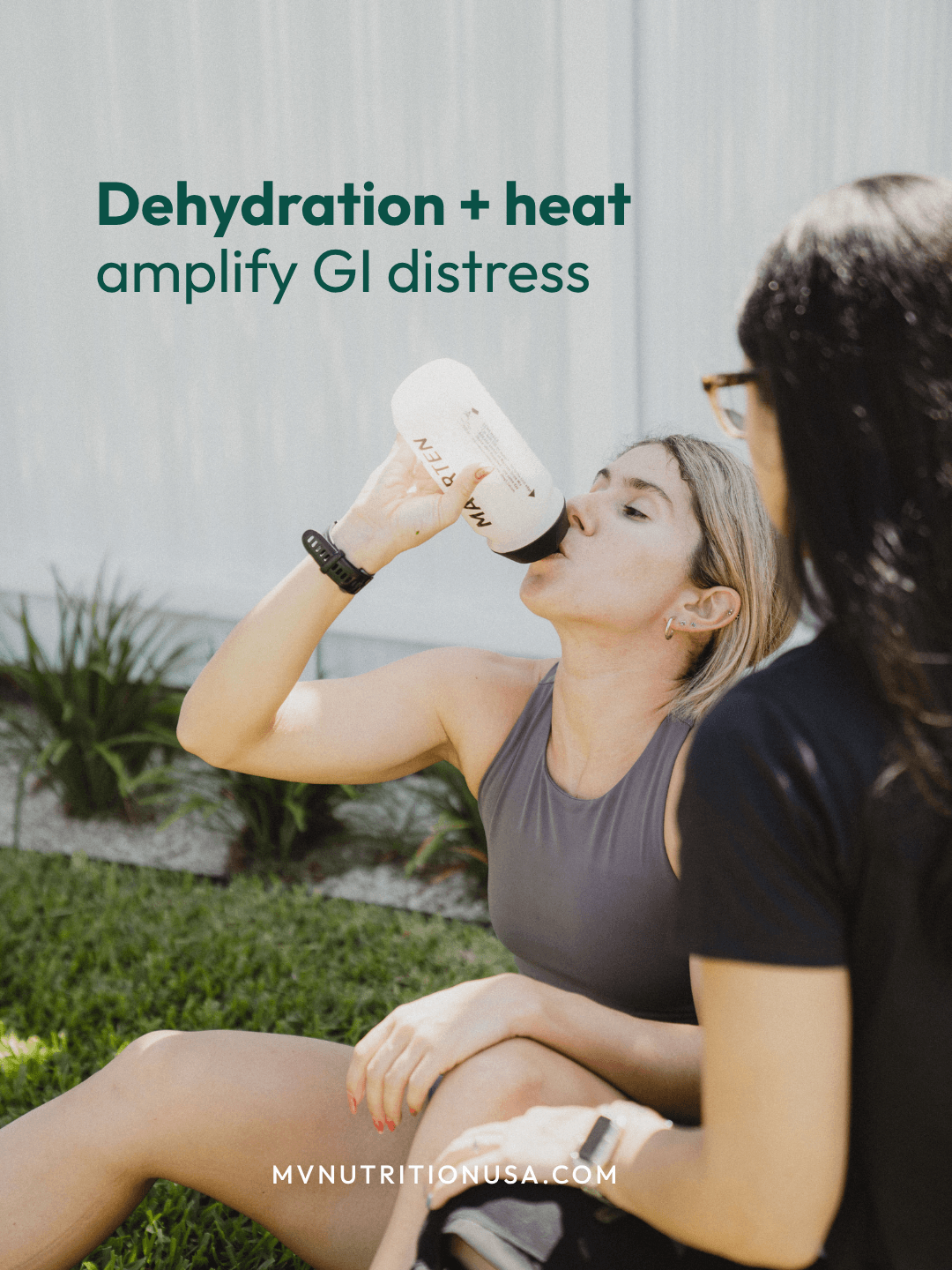
- Inadequate hydration
- Unfamiliar foods or supplements on race day
4. Environmental & Physiological Stressors
- Heat and dehydration
- High training intensity
- Psychological stress (gut-brain axis)
Types of GI Symptoms in Athletes
- Upper GI: reflux, nausea, bloating
- Lower GI: urgency, cramping, diarrhea
Understanding symptom type helps guide targeted interventions.
Evidence-Based Management Strategies
1. Adjust Pre-Exercise Nutrition
- Limit fiber and fat 2–4 hours pre-training
- Prioritize low-fiber, easily digestible carbohydrates
- Avoid large meals within 1–2 hours of exercise
Example:
Rice cakes + honey, banana, sports drink
2. Optimize Carbohydrate Intake During Exercise
- Aim for 30–90 g carbs/hour depending on duration
- Use multiple transportable carbs (glucose + fructose) to improve absorption
- Keep solutions around 6–8% concentration
3. Hydration Strategy
- Prevent dehydration (>2% body weight loss increases GI risk)
- Include sodium (300–600 mg/hour or more depending on sweat rate)

4. Train the Gut
The gut adapts to repeated exposure:
- Practice race fueling during training
- Gradually increase carbohydrate intake
- Improve gastric emptying and absorption capacity
5. Manage Fiber Intake Strategically
- Maintain adequate daily fiber for gut health
- Reduce intake before key sessions or races
6. Be Strategic with Supplements
Some supplements increase GI risk:
- Caffeine (dose-dependent)
- Sodium bicarbonate
- Iron (in some athletes)
Use individualized dosing and timing.
7. Consider Targeted Interventions
- Low FODMAP approach (short-term, for IBS-type symptoms)
- Probiotics (strain-specific, modest evidence for reducing illness and GI symptoms)

Practical Takeaways
- GI distress is common, but not inevitable
- Most symptoms are linked to fueling, hydration, and intensity
- The gut is trainable and adaptable
- Small adjustments can lead to major performance gains
At MVNUTRITION, we specialize in helping athletes resolve GI issues without compromising performance. From gut training protocols to race-day fueling strategies, we build fully individualized plans so you can train and compete with confidence.
Book your consultation and take control of your performance from the inside out.