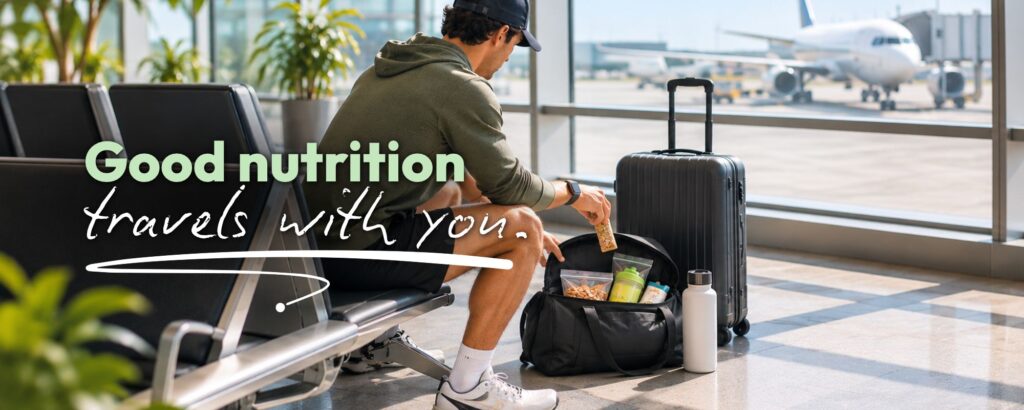
Travel can disrupt even the most consistent nutrition routine. Flights get delayed. Meal times change. Food options become limited. Training schedules shift. And suddenly, the routine that works perfectly at home becomes difficult to follow. Whether you’re traveling for a race, competition, work, or vacation, the goal isn’t to maintain a perfect diet. It’s to create a flexible nutrition strategy that keeps you adequately fueled while allowing you to enjoy the experience.
Why Travel Can Affect Nutrition?
Travel changes several factors that influence eating behaviors such as meal timing, food availability, sleeping patterns, amount of training, gastrointestinal tolerance, among others.
For athletes, these disruptions can affect energy availability, training quality, recovery, and competition readiness. The best travel nutrition strategy begins before you leave home.
Pack foods that don't require refrigeration
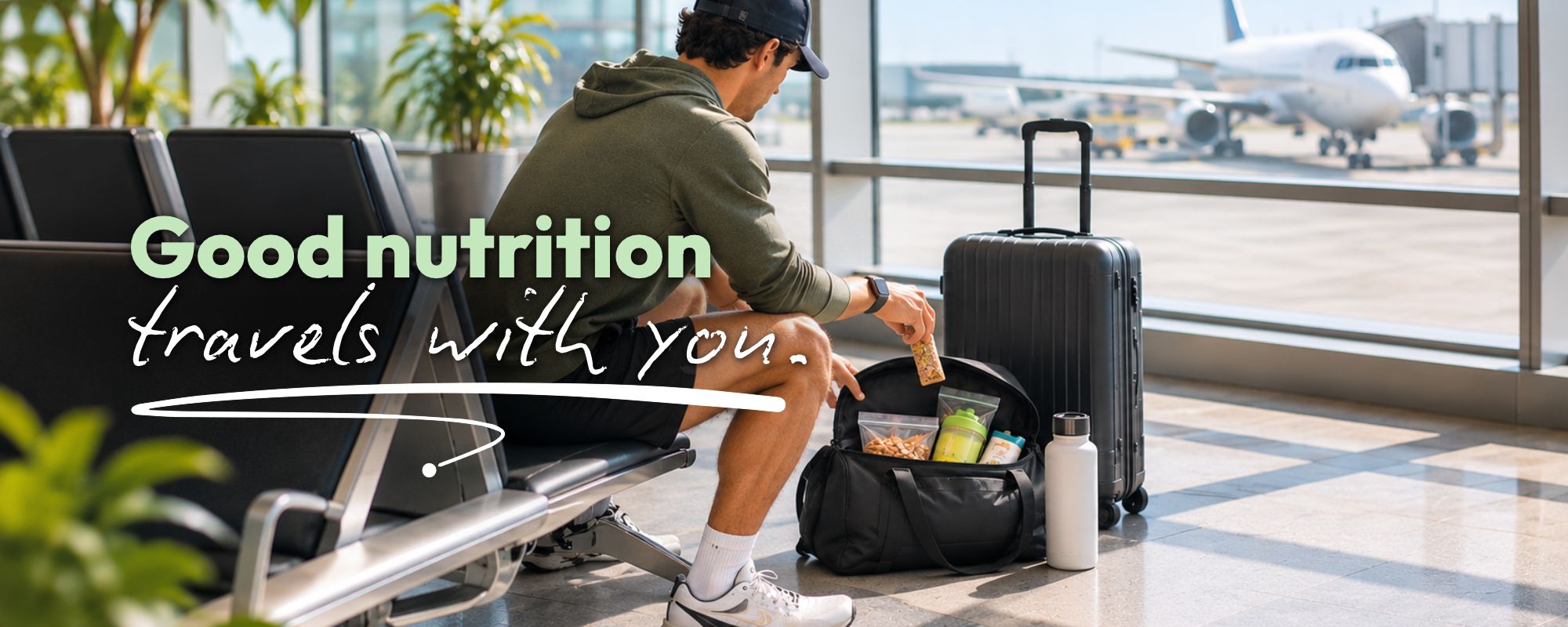
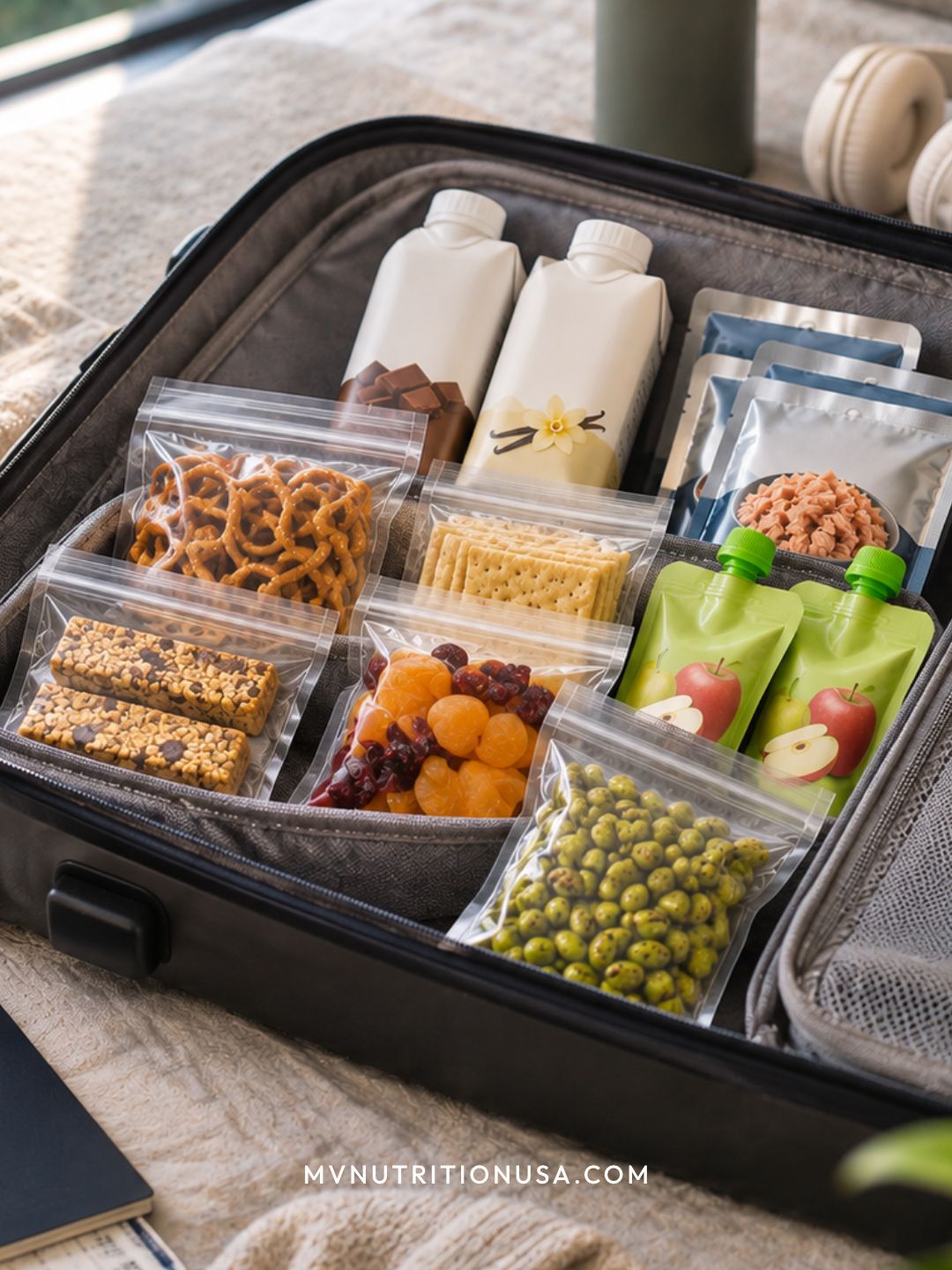
One of the simplest ways to avoid long periods without food is to pack portable snacks. Aim to include both carbohydrate-rich and protein-rich options.
Carbohydrate Options
Pretzels, Crackers, Granola bars, Fig bars, Dried fruit, Applesauce pouches, Dry cereal, Rice cakes
Protein Options
Protein bars, Roasted edamame, Tuna or salmon pouches, Shelf-stable protein shakes, Nut butter packets, Roasted chickpeas
Easy Combinations
Granola bar + shelf-stable milk, Pretzels + protein shake, Crackers + tuna pouch, Dried fruit + roasted edamame, Rice cakes + nut butter
For air travel, follow current airport security rules for liquids, gels, and food products.
Hydration starts before you travel
Travel can change drinking patterns. You may drink less because you’re rushing, avoiding restroom stops, or spending long periods in transit.
Airplane cabins also have low humidity, which can increase respiratory and skin moisture losses, although this does not mean every traveler needs electrolyte supplements.
For most routine travel, drinking fluids regularly and responding to thirst is appropriate. Practical strategies include:
- Bring an empty refillable bottle through airport security
- Fill it before boarding
- Drink with meals
- Keep fluids accessible during road trips
- Increase attention to hydration when arriving in hot environments
- Replace significant sweat losses when exercising
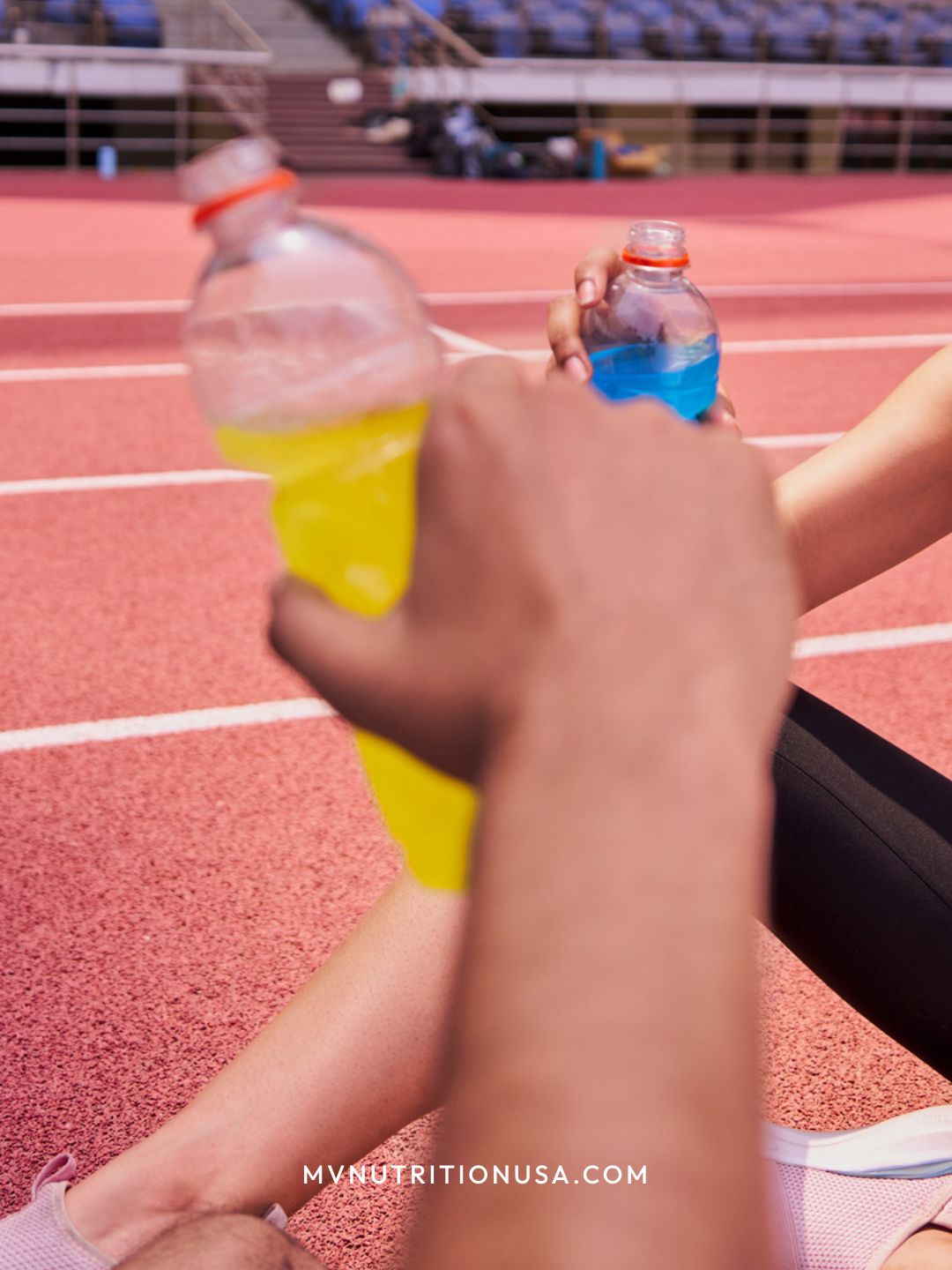
Electrolyte drinks can be useful in selected situations, particularly with prolonged exercise, heavy sweating, or substantial sodium losses. They are not necessary for every flight.
Build balanced meals at airports and restaurants
Airport and restaurant food can absolutely fit into a healthy nutrition plan. Instead of looking only for the lowest-calorie item, consider whether the meal provides sufficient energy and nutrients. A useful starting point is: Carbohydrate + Protein + Produce + Fluids.
– Airport Breakfast
Egg sandwich + fruit + milk
or
Oatmeal + Greek yogurt + banana
– Airport Lunch
Chicken sandwich + fruit
or
Rice bowl + protein + vegetables
– Restaurant Dinner
Fish or chicken + rice or potatoes + vegetables
or
Pasta with protein and vegetables
For athletes with high training demands, carbohydrate portions may need to be larger. For people with different energy needs, portions can be adjusted accordingly.
Make hotel breakfast work for you
Hotel breakfasts are often one of the easiest opportunities to establish a predictable meal routine.
Useful combinations include:
Option 1
Eggs + toast + fruit
Option 2
Oatmeal + yogurt + banana
Option 3
Cereal + milk + eggs
Option 4
Bagel + peanut butter + fruit
For athletes training in the morning, the ideal combination depends on how much time is available before exercise. A smaller carbohydrate-rich snack may be better tolerated immediately before training.
A larger meal may be appropriate when there is more time to digest.

Traveling for a race or competition
Competition travel requires additional planning.
Athletes should consider:
- Arrival time
- Time-zone changes
- Training schedule
- Competition start time
- Food availability
- Refrigeration access
- Hydration
- Familiar fueling products
- Recovery between events
The days before competition are generally not the ideal time to experiment with unfamiliar foods, supplements, or aggressive dietary changes.
Before Competition
Maintain familiar meals and adequate carbohydrate intake.
For endurance events requiring carbohydrate loading, the amount and duration should be individualized according to event demands.

During Competition
Bring enough fuel for the expected duration. Long events may require planned carbohydrate intake, fluid replacement, and sodium replacement. For endurance exercise lasting more than approximately 2.5 hours, some well-trained athletes may benefit from carbohydrate intakes approaching 90 g/hour or higher when using appropriately formulated products and practiced gut-training strategies. These targets are not necessary or appropriate for every athlete.
After Competition
Prioritize carbohydrate, protein, and rehydration, especially when another event is scheduled soon.
Don't forget food safety
Travel nutrition isn’t only about macronutrients. Food safety matters, especially when packing meals for long trips or competitions.
Perishable foods should be kept adequately chilled. Avoid leaving foods such as cooked meat, dairy products, or prepared meals at room temperature for extended periods.
Use insulated bags and ice packs when necessary. Shelf-stable options are particularly useful when refrigeration isn’t available.
Travel nutrition for general health and weight management
Travel doesn’t have to mean abandoning your health goals.
Instead of trying to control every meal, focus on a few repeatable behaviors:
- Eat regular meals
- Include protein consistently
- Choose fruits and vegetables when available
- Drink fluids throughout the day
- Stay physically active in enjoyable ways
- Get adequate sleep
- Allow flexibility for local foods and special occasions
You don’t need to compensate for vacation meals with fasting or excessive exercise.
Returning to your normal routine afterward is usually more helpful than imposing new restrictions.
How MV NUTRITION helps with travel nutrition
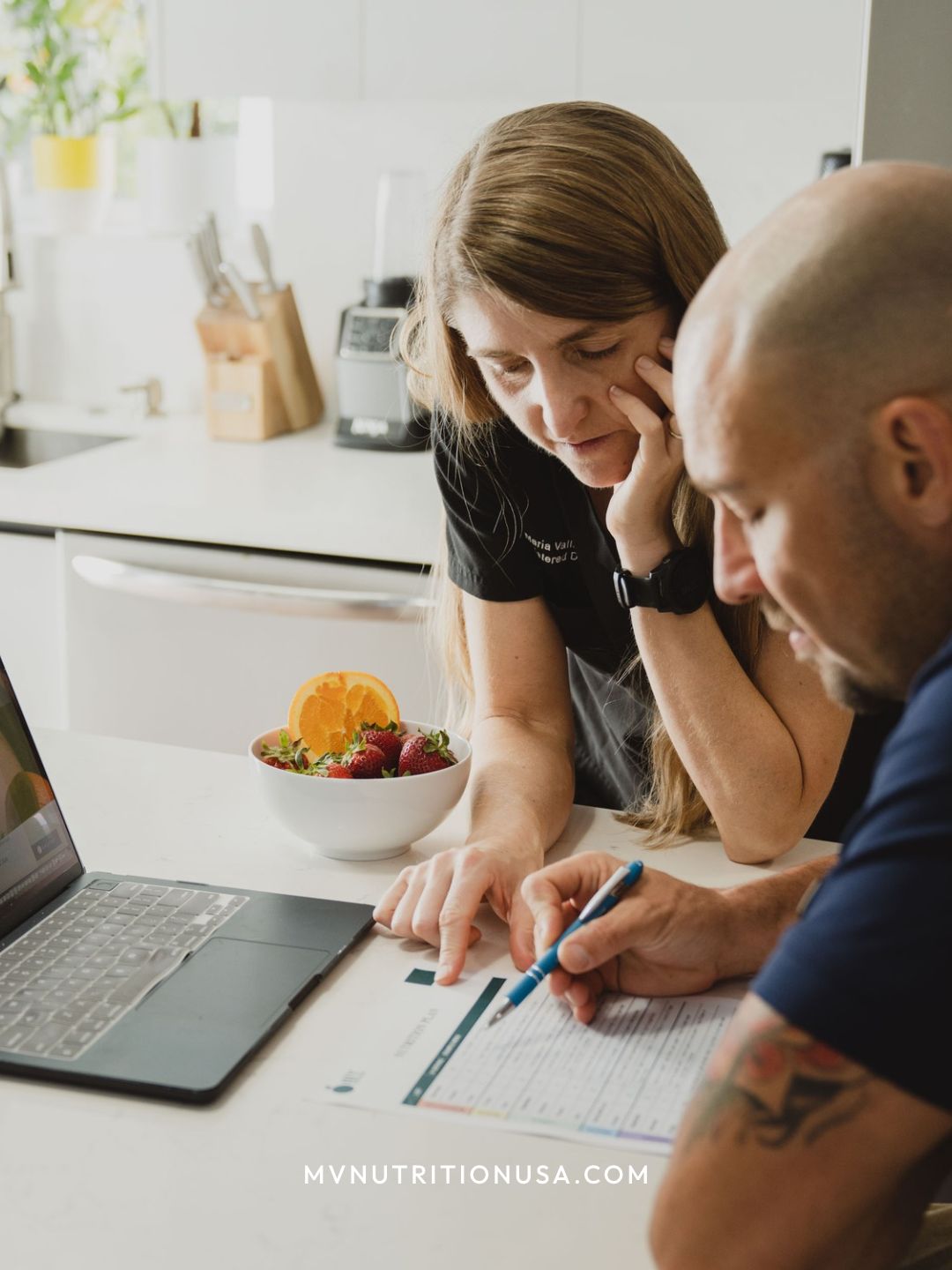
At MV NUTRITION, we help clients build nutrition strategies that work beyond their home kitchens. For athletes, this may involve detailed competition fueling plans, hydration strategies, carbohydrate targets, recovery nutrition, and travel-specific meal timing.
For active adults and families, it may involve convenient food recommendations, restaurant guidance, grocery lists, and practical meal combinations.
Depending on individual needs, we can help with:
- Personalized travel snack lists
- Competition fueling plans
- Airport and restaurant recommendations
- Hydration strategies
- Hotel breakfast planning
- Grocery shopping while traveling
- GI tolerance
- Supplement planning
- Recovery between training sessions
- Nutrition strategies for busy schedules
Our goal is to remove unnecessary complexity and help clients feel confident making food decisions wherever they go.
Final thoughts
Travel nutrition doesn’t need to be complicated. A few familiar snacks, a realistic hydration strategy, balanced meals, and some advance planning can make a meaningful difference.
For athletes, these habits can support training quality and competition readiness. For families and active adults, they can make it easier to maintain healthy routines while enjoying travel.
The best nutrition plan isn’t the one that works only at home. It’s the one that adapts to your life.
If you have an upcoming race, competition, vacation, or work trip, MVNUTRITION can help create a personalized nutrition strategy around your schedule and goals.
Visit mvnutritionusa.com to learn more.