

You can follow a great training program, buy the right equipment, track your workouts, and still struggle to perform if you aren’t consistently giving your body enough fuel. For many athletes and active adults, the problem isn’t knowing that nutrition matters. It’s the relationship they have developed with food. Thoughts such as:
- “I didn’t train today, so I shouldn’t eat as much.”
- “Carbs will make me gain weight.”
- “I need to earn this meal.”
- “I ate too much yesterday, so I’ll eat less today.”
May seem like discipline, but when these behaviors repeatedly interfere with adequate energy and nutrient intake, they can work against both health and performance.
Performance requires energy
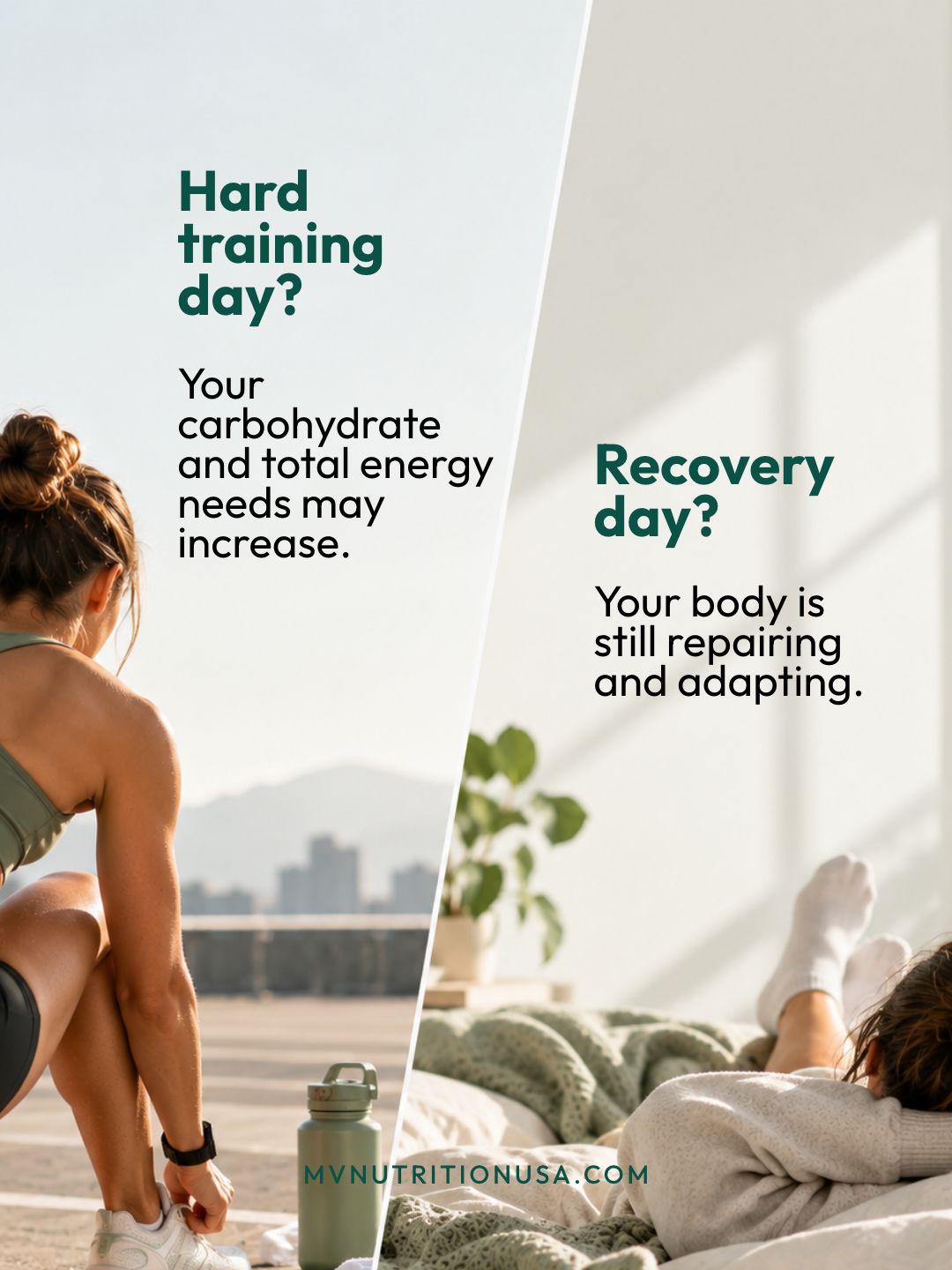
Exercise creates a physiological demand.
Your body then needs energy and nutrients to perform the work, replenish glycogen, repair tissue, adapt to training, and prepare for the next session. When dietary energy remaining after exercise is insufficient to support normal physiological functions, this is described as low energy availability.
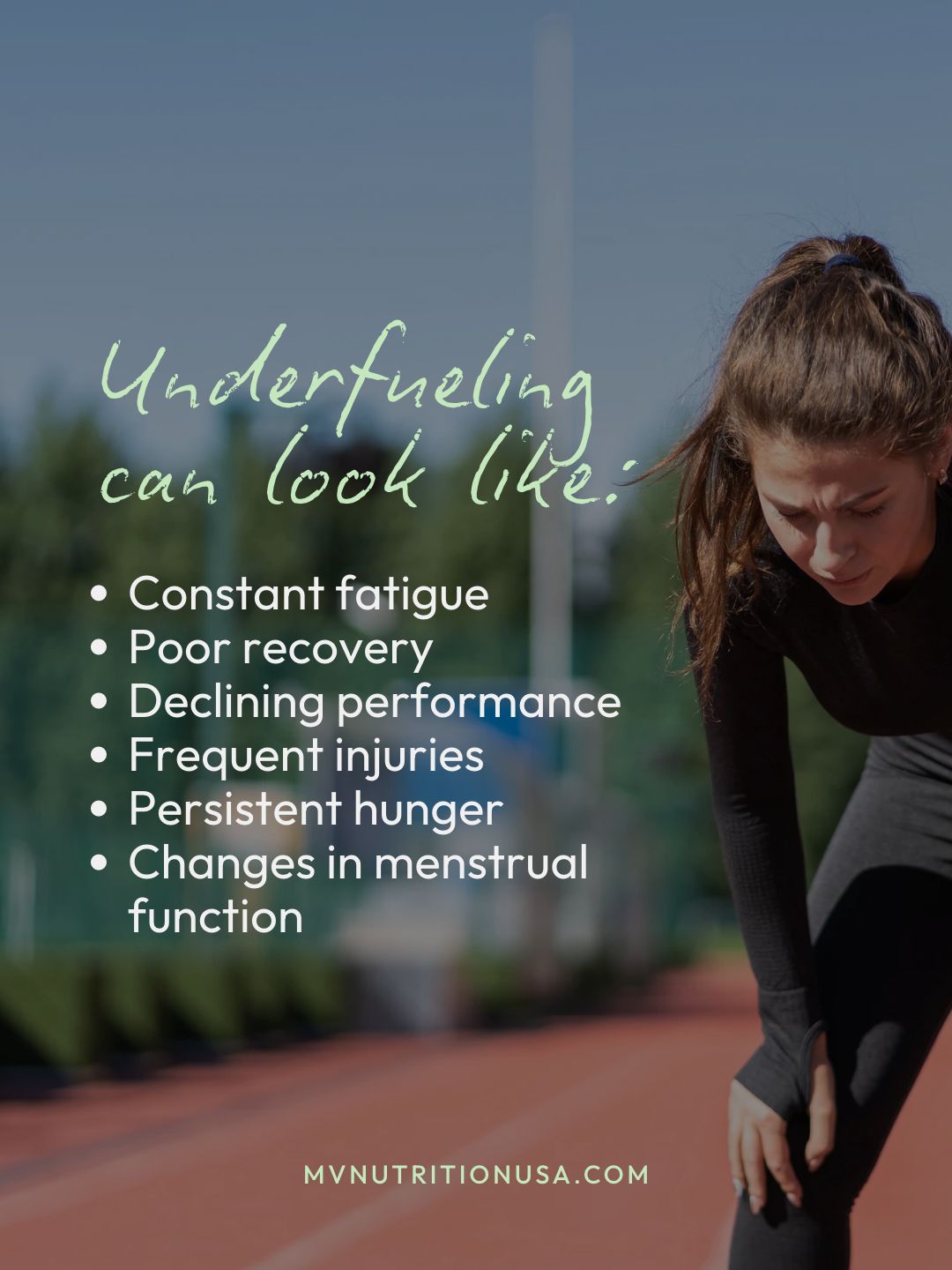
Persistent low energy availability can affect multiple systems, including bone health, reproductive function, immunity, metabolism, recovery, and athletic performance. In sport, these effects are recognized within the broader framework of Relative Energy Deficiency in Sport, or RED-S.
Importantly, this can happen intentionally or unintentionally. An athlete doesn’t necessarily have to be following an extreme diet. Busy schedules, suppressed appetite after training, inadequate sports nutrition knowledge, dietary restrictions, or simply underestimating energy needs can all contribute.

When "Healthy eating" becomes underfueling
Are you skipping meals?
Are you avoiding intrafueling?
Are you always training in a fasted state?
Are you skipping recovery snacks and meals?
Food quality and quantity matter. Food timing matters too.
For athletes, the question isn’t simply:
“Is this food healthy?”
It is also:
“Is this enough to support what I’m asking my body to do?”
Carbohydrates are not the enemy
Carbohydrates are particularly vulnerable to restrictive nutrition trends. Yet carbohydrates are an important fuel for moderate- and high-intensity exercise.
Muscle and liver glycogen help support training intensity, and carbohydrate availability becomes increasingly important as training duration or intensity rises.
Chronically restricting carbohydrates while asking the body to repeatedly perform demanding sessions can compromise training quality and recovery. That doesn’t mean every person requires the same carbohydrate intake.
A recreational strength session and a four-hour cycling session clearly create different demands. This is where individualized sports nutrition becomes valuable.

Food rules can affect training decisions
A difficult relationship with food may also change how someone approaches exercise. Training can become a way to compensate for eating.
Rest days may create guilt. Missing a workout may trigger food restriction. The real question is: is it worth it to put all this effort into training, without giving your body the resources to create adaptations, prevent overtraining and injuries?.
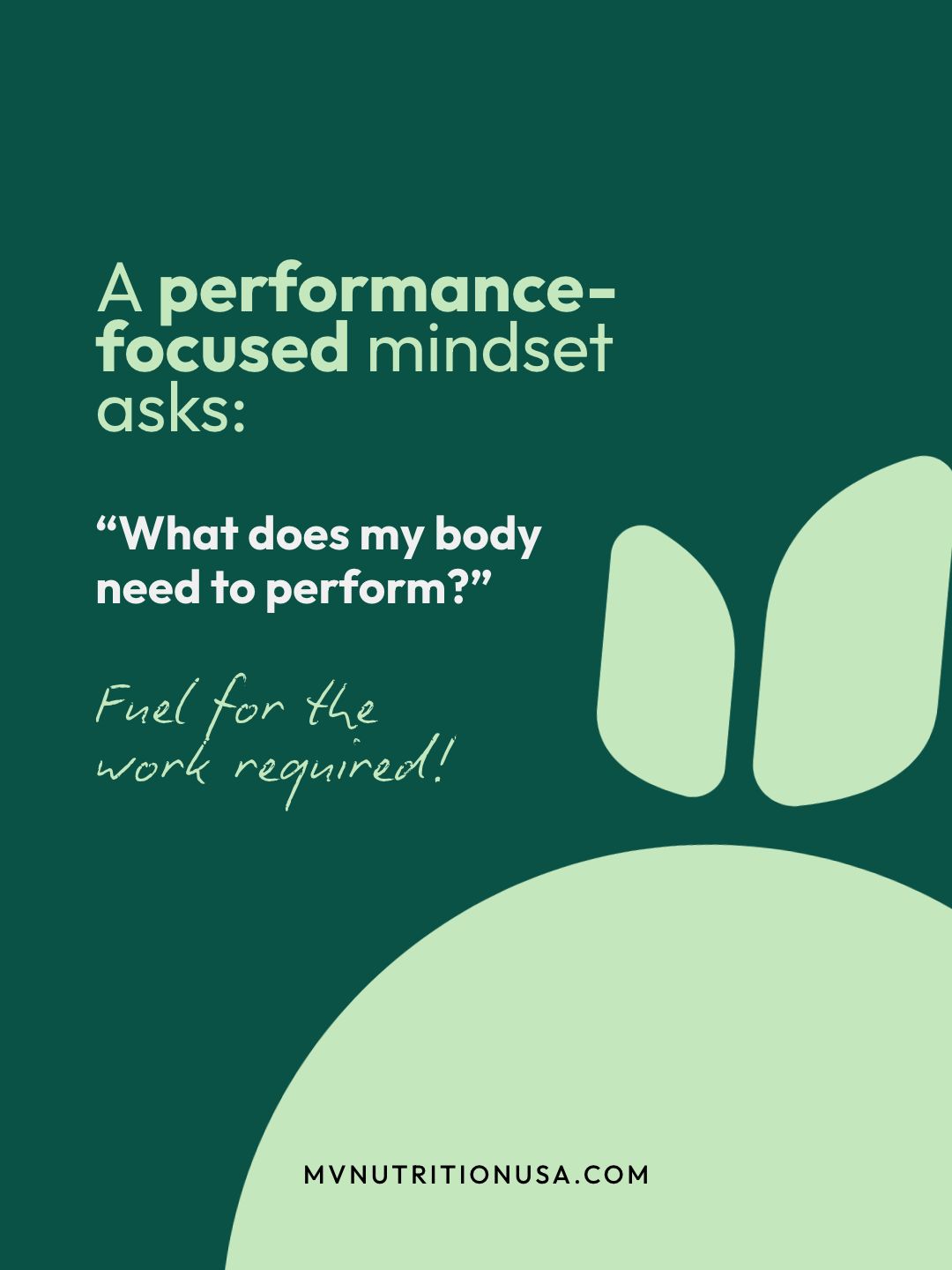
A healthier performance framework will be: Fuel for the work required, there is a time and a place for everything.
You do not need to earn the right to eat.
What does performance-focused nutrition look like?
Performance nutrition still has structure. It may involve planned meals, protein targets, carbohydrate recommendations, hydration strategies, and intentional pre- and post-workout nutrition.
The difference is the purpose behind those decisions.
Instead of asking:
“How little can I eat and still get through training?”
We ask:
“What does my body need to perform and recover from this training?”
That shift can be powerful.
How MV NUTRITION approaches these cases
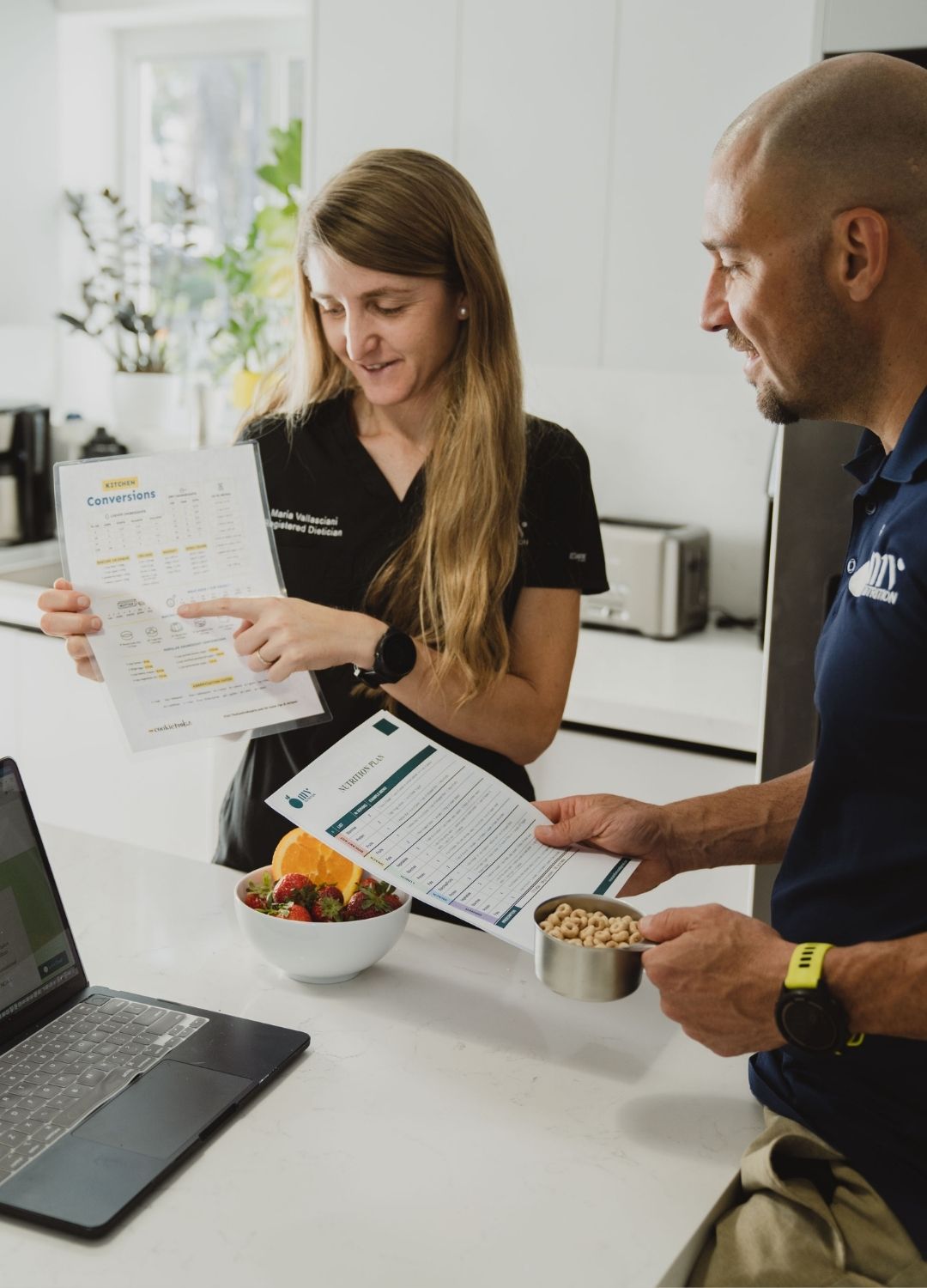
At MVNUTRITION, we don’t evaluate nutrition in isolation.
For an athlete struggling with performance, recovery, body-composition concerns, or their relationship with food, we may review:
- Current energy and nutrient intake
- Training volume and intensity
- Intrafueling and competition strategies
- Clinical history
- Recovery, sleep
- Menstrual history when relevant
- Food rules and restrictions
- Body-composition goals
- Supplements
- Relevant laboratory values when available
We then identify where nutrition may not match the athlete’s actual physiological demands. The solution isn’t automatically “eat more.”
It may involve moving more energy earlier in the day, increasing carbohydrates around key sessions, improving recovery nutrition, reducing unnecessary restrictions, or developing more flexible eating patterns.
When concerns suggest an eating disorder or require additional psychological support, sports nutrition should be part of a multidisciplinary approach with the appropriate medical and mental-health professionals.
Performance and food freedom can coexist
Athletes do not have to choose between having goals and having a healthy relationship with food.
Structure and flexibility can coexist.
You can care about performance.
You can have body-composition goals.
You can intentionally plan your nutrition.
And you can still eat socially, enjoy dessert, take rest days, and respond to hunger without guilt.
The objective is not nutritional perfection. It is a way of eating that consistently provides what your body needs while remaining sustainable enough to support both performance and life.
If you’re training hard but feel like food has become increasingly complicated, MV NUTRITION can help evaluate whether your nutrition is truly supporting the work you’re putting in.