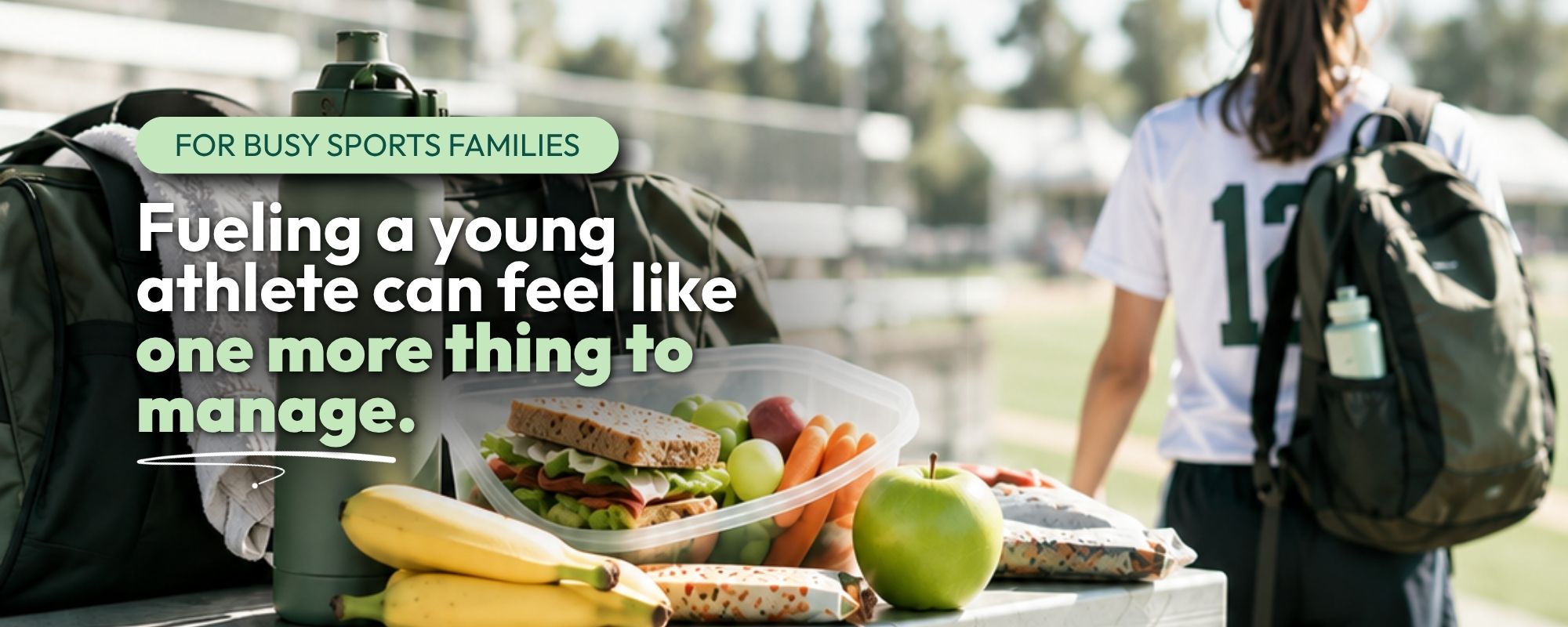
The school year can make nutrition feel complicated. Breakfast happens in a rush. Lunch has to fit into a short school break. Practice starts before dinner. Homework comes afterward. Some nights there are games, tournaments, or multiple children going to different activities.
For active families, the solution is usually not a more complicated meal plan. It is a better system. With a little preparation, families can make sure young athletes are fueled for school and sport without spending hours cooking every day.
Start with the Athlete’s Schedule
Before planning meals, look at the weekly calendar.
Write down:
- School start time
- Lunch time
- School dismissal
- Practice start and finish
- Games
- Strength sessions
- Travel time
- Evening commitments
Once you can see the schedule, it becomes easier to identify where fueling gaps are occurring.
For example:
7:00 AM: Breakfast
12:00 PM: Lunch
4:30 PM: Practice
7:30 PM: Finish practice
8:15 PM: Dinner
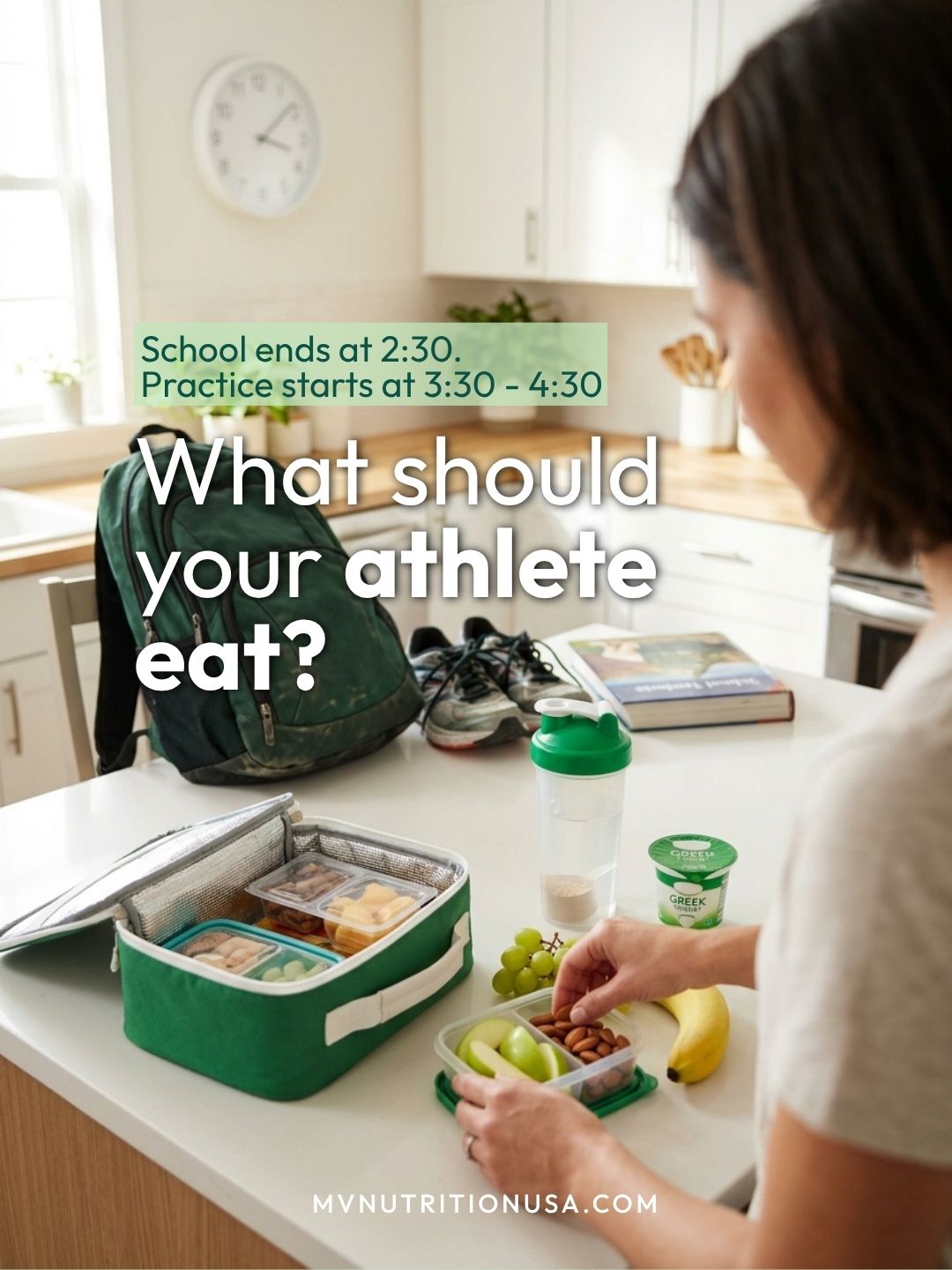
The biggest issue here is often the 4½-hour gap between lunch and practice. The solution may be as simple as adding an after-school snack.
Breakfast does not have to be complicated
Skipping breakfast can make it difficult for young athletes to meet their energy needs later in the day.
A balanced breakfast should ideally provide:
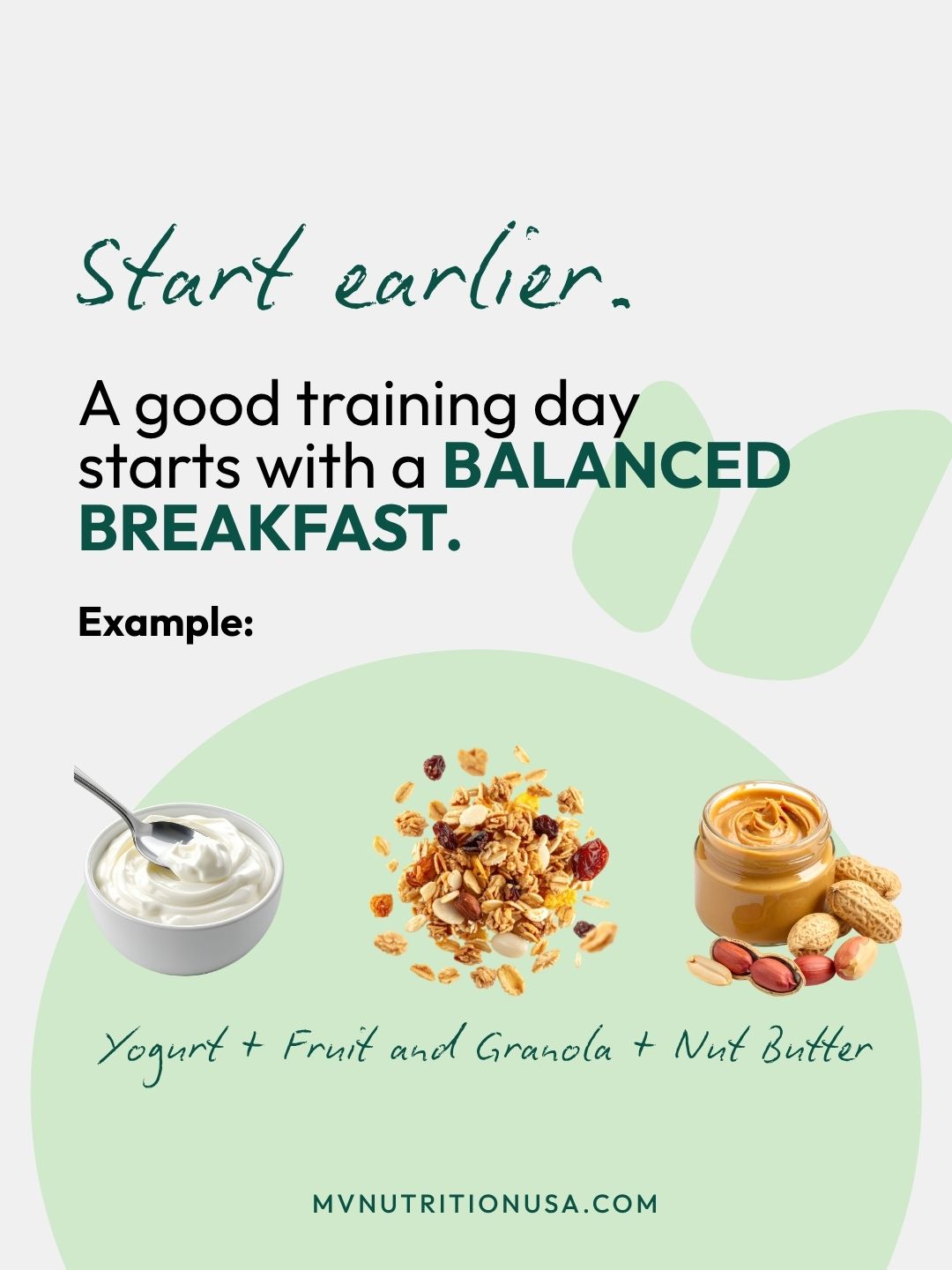
Carbohydrate/Fruits + Protein + Fats +Fluid
Easy options include:
- Cereal + milk + banana + nut butter
- Greek yogurt + granola + berries + nuts
- Egg sandwich with avocado + fruit
- Peanut butter/Jelly toast + yogurt
- Smoothie with milk, fruit, oats, and yogurt
- Protein waffles + nut butter+ fruit
Families do not need elaborate breakfasts every morning. Convenient foods count and are better than NOT FUELING.
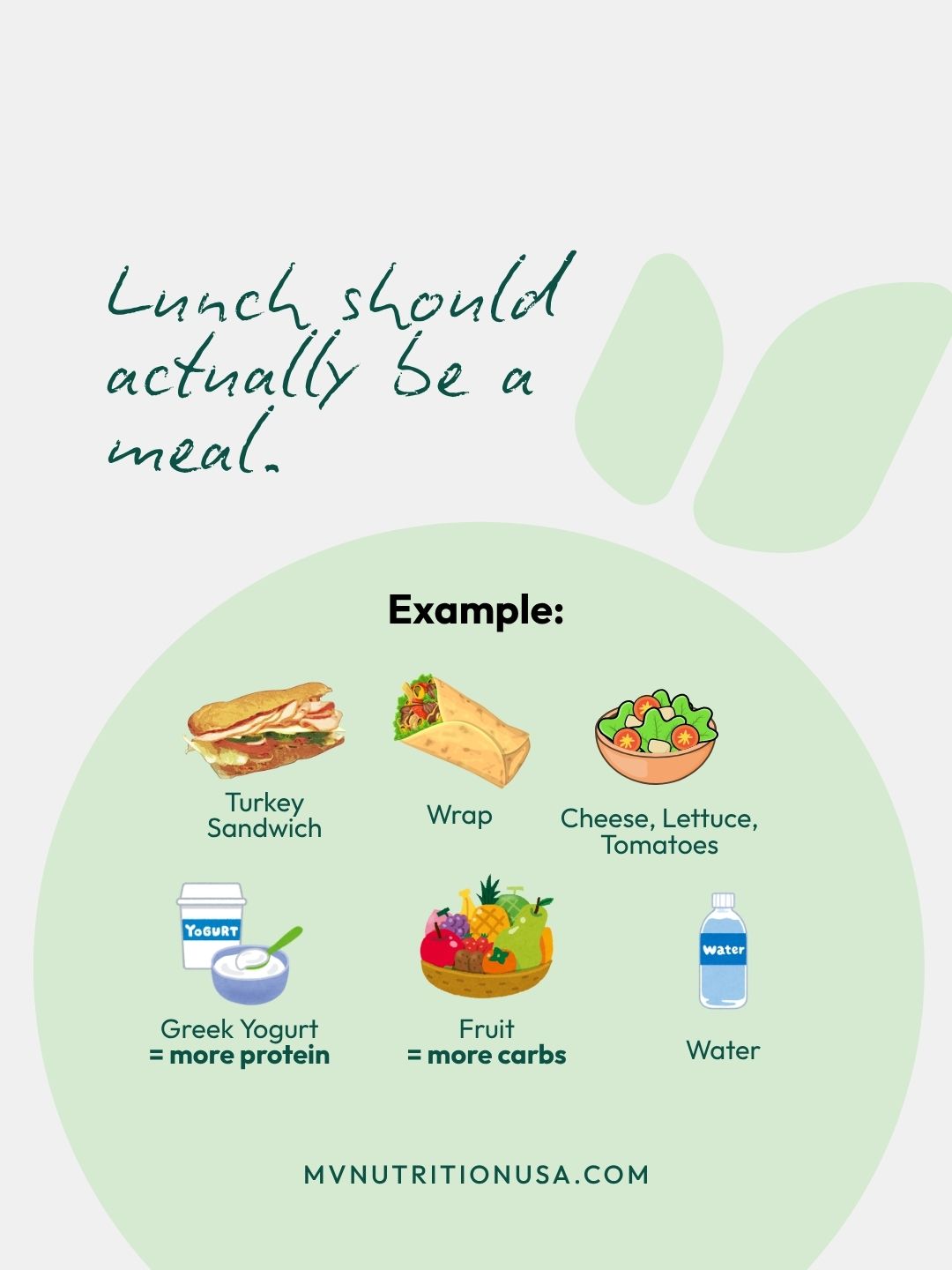
Make school lunch an actual meal
A small snack-sized lunch may not be enough for an athlete training later that afternoon. A practical lunch formula is:
Carbohydrate + Protein + Fruit/Vegetable + Fluid
For example:
- Turkey sandwich
- Pretzels
- Fruit
- Greek yogurt
- Water
- Or:
- Rice bowl
- Chicken
- Vegetables
- Fruit
- Milk
Athletes who can’t eat large amounts at lunch may benefit from packing additional snacks that can be eaten later. If they cannot bring a meal to school, work on teaching them at home how to make smart choices at the school cafeteria.
The after-school snack is often the missing piece
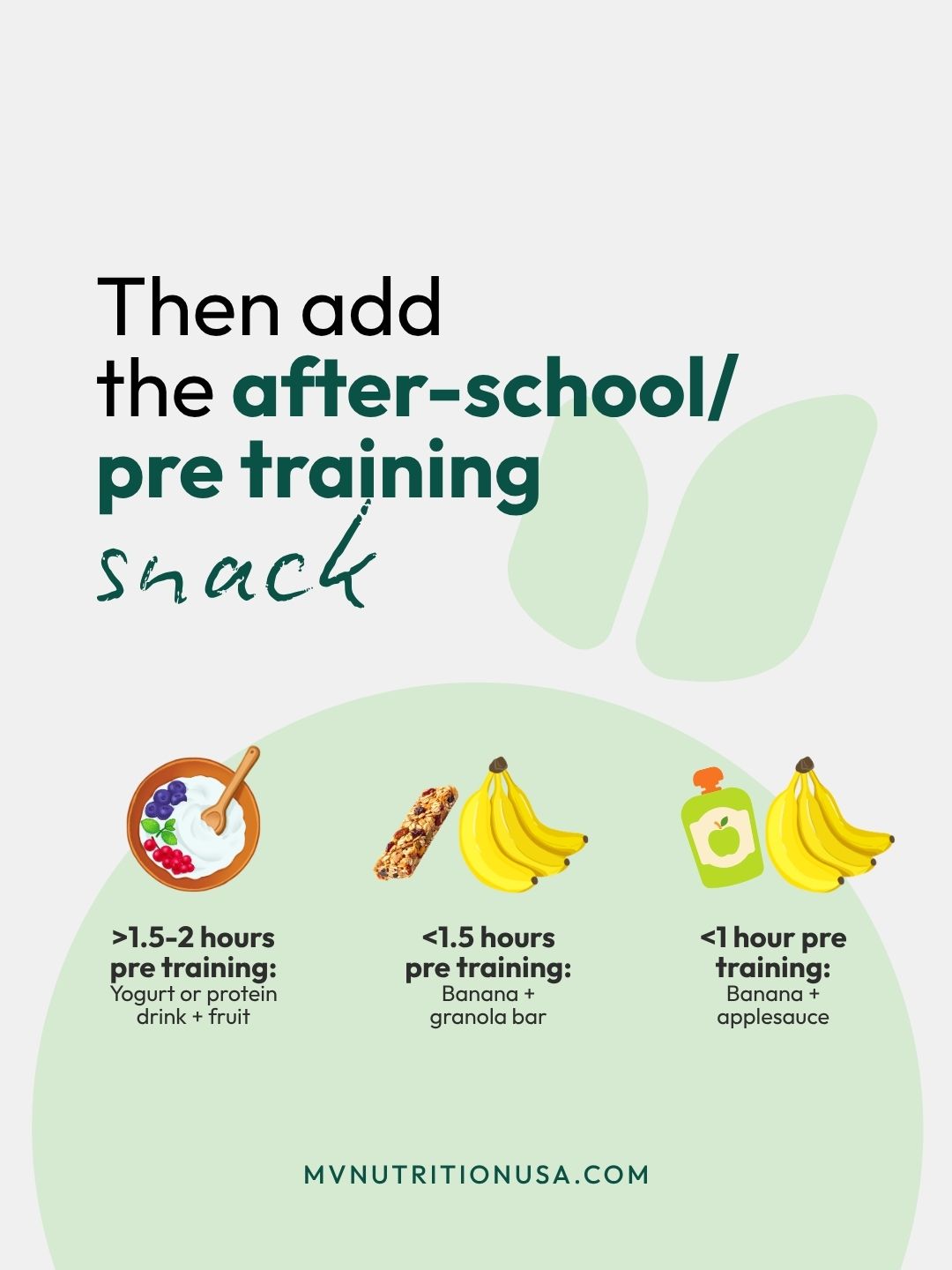
One of the highest-impact changes families can make is creating a consistent pre-practice snack routine.
If practice starts 1–2 hours after school, options might include:
- Bagel + yogurt
- Granola bar + banana + milk
- Pretzels + cheese stick
- Turkey sandwich
- Cereal + milk
- Fruit + yogurt
If practice starts in less than an hour, choose something lighter and easier to digest:
- Banana
- Applesauce
- Crackers
- Pretzels
- Fig bars
- Low-fiber cereal
- Sports drink when appropriate
This simple habit can dramatically improve training energy.
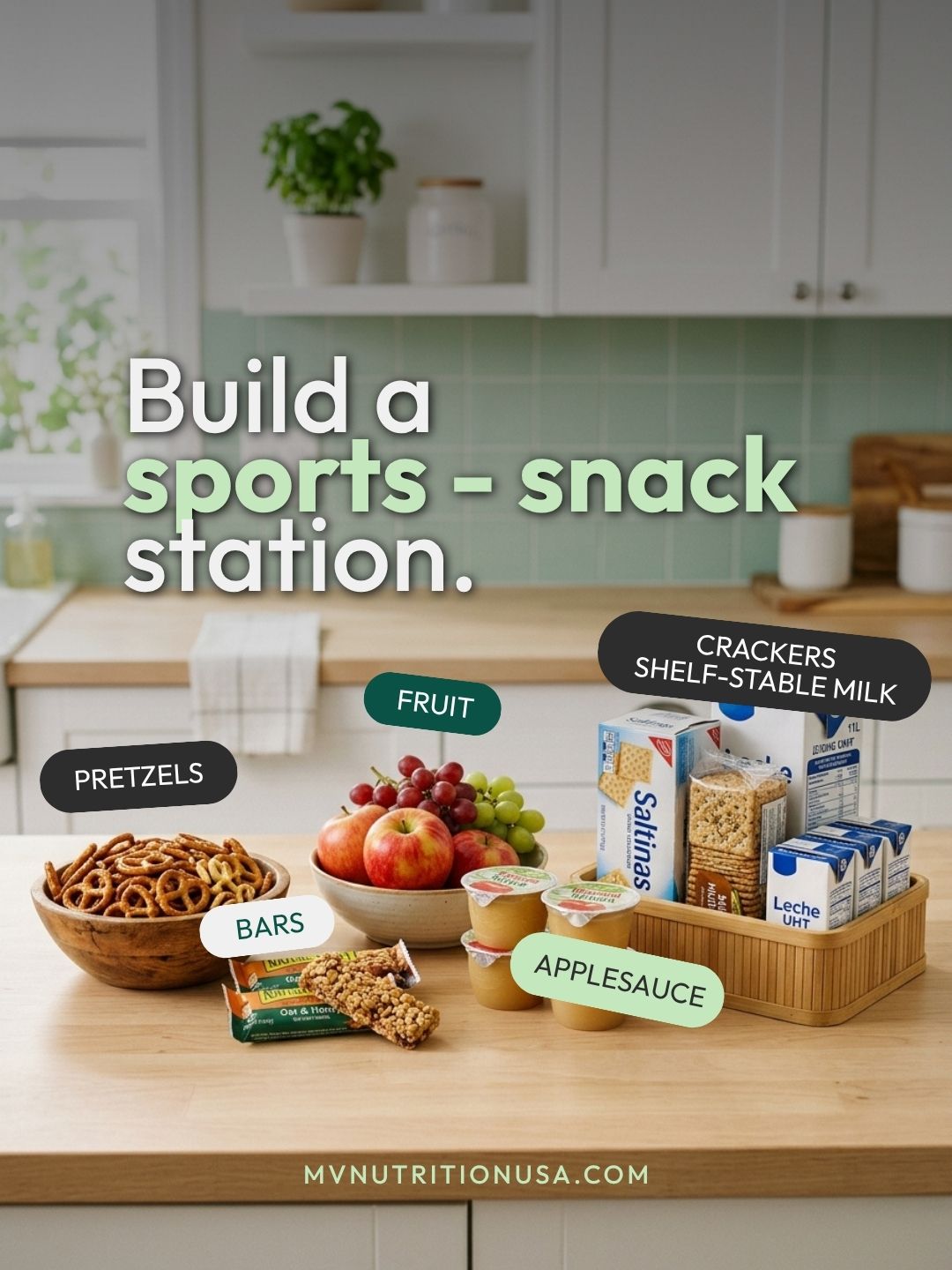
Build a sports snack station at home
Instead of searching for food every afternoon, create a designated fueling area.
Keep shelf-stable options available such as:
- Pretzels
- Crackers
- Granola bars
- Fig bars
- Applesauce pouches
- Dried fruit
- Nut butter packets
- Shelf-stable milk
- Sports drinks or electrolyte products when appropriate
In the refrigerator, keep:
- Yogurt
- Cheese sticks
- Milk
- Sandwiches
- Fruit
- Hard-boiled eggs
When the food is visible and accessible, athletes are more likely to eat it.
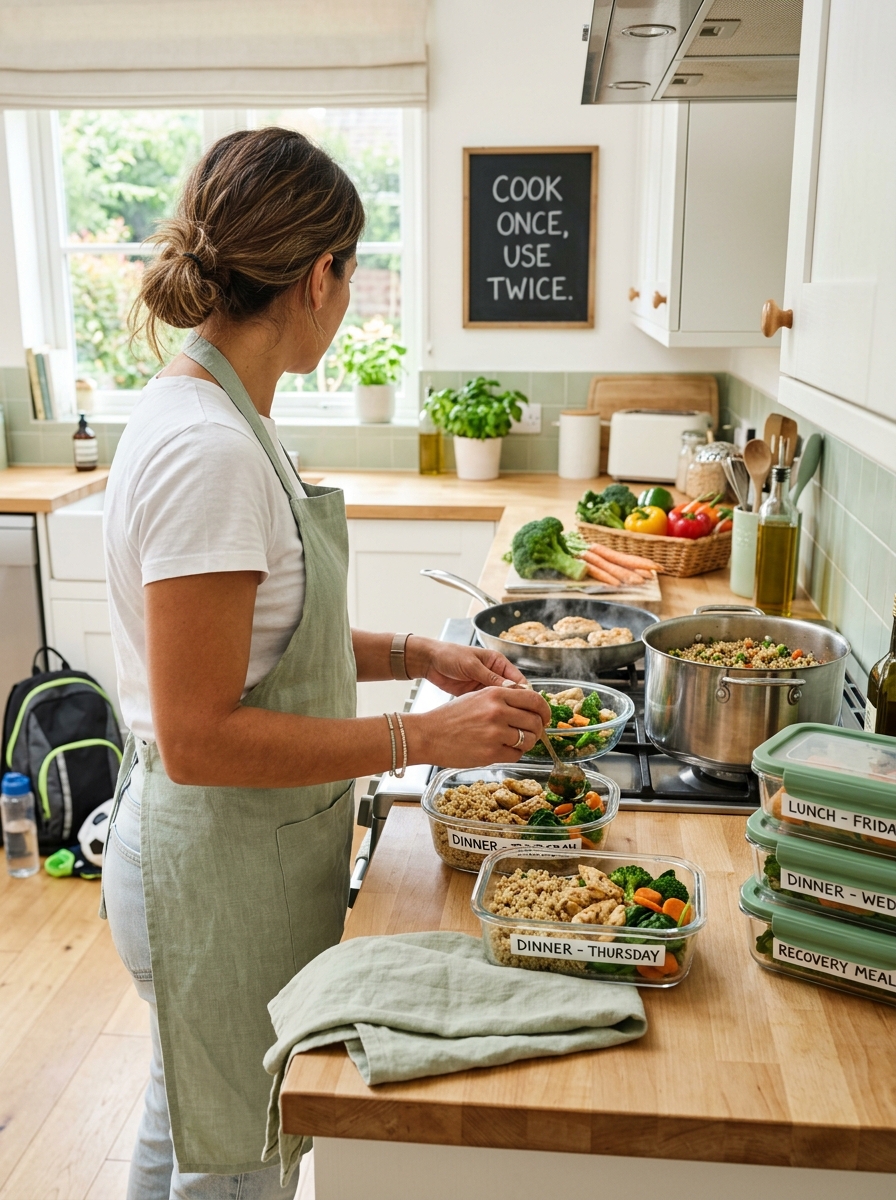
Use the "Cook Once, Use Twice" strategy
Chicken
- Monday: Chicken + rice + vegetables
- Tuesday: Chicken wraps
- Wednesday: Chicken pasta
Ground Turkey or Beef
- Monday: Tacos
- Tuesday: Rice bowls
- Wednesday: Pasta sauce
This reduces cooking time while still providing variety.
Keep easy carbohydrates available
Active children and teenagers need carbohydrate-rich foods regularly. Good staples include: Rice, Pasta, Potatoes, Bread, Tortillas, Oats, Cereal, Fruit, Crackers, Bagels. Preparing a few of these foods in advance makes it easier to build balanced meals quickly.
Convenience foods are allowed
Nutrition does not have to be made entirely from scratch. Useful convenience foods include: Rotisserie chicken, Microwave rice, Frozen vegetables, Pre-cut fruit, Bagged salads, Frozen grilled chicken, Individual yogurts, Ready-made sandwiches, Frozen rice or grain bowls, Pre-cooked hard-boiled eggs. Convenience is not a failure. For busy families, it is often what makes consistency possible.
Plan dinner around practice time
Meal timing should change depending on when practice occurs.
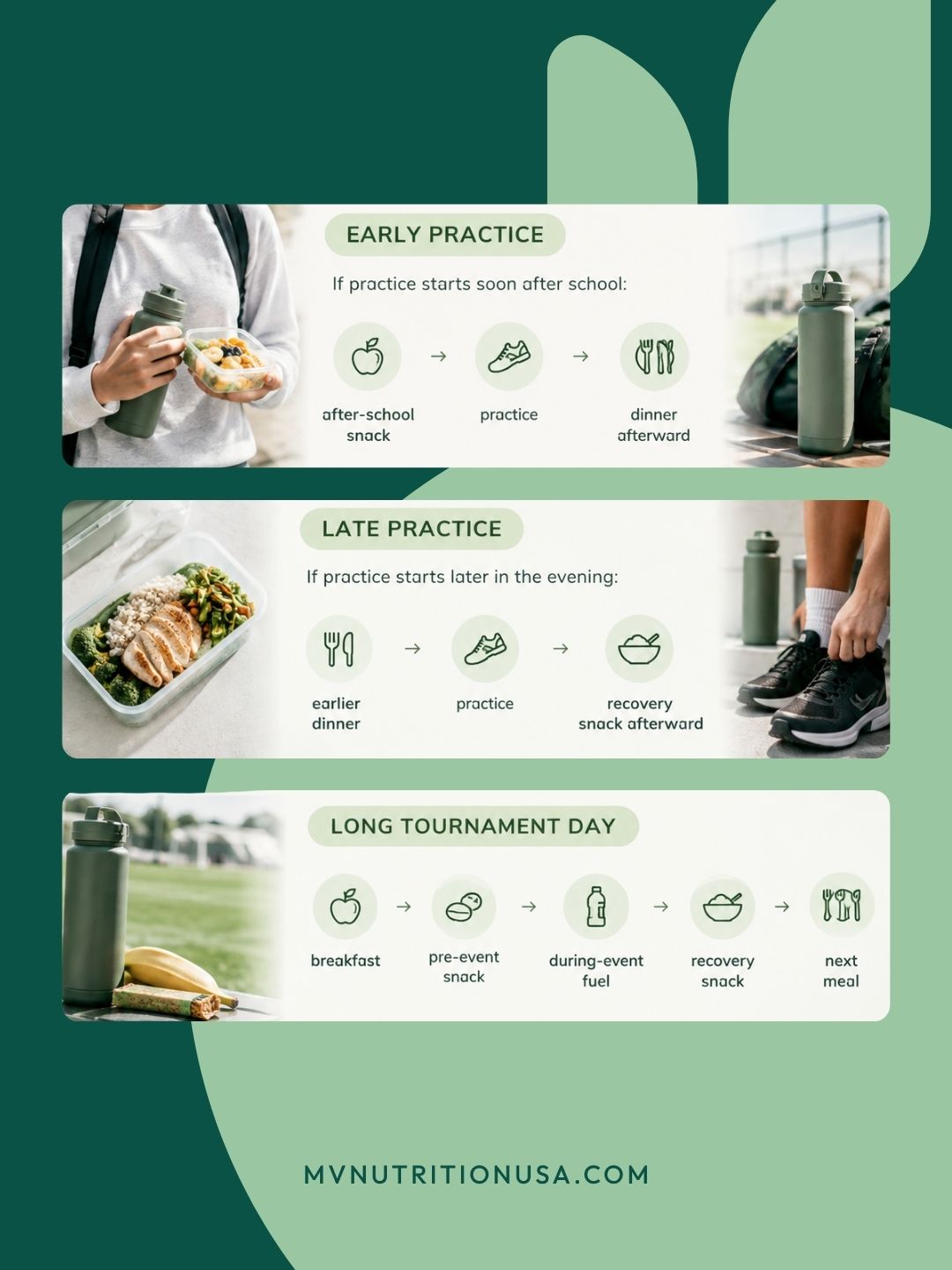
Early Practice
If practice starts soon after school:
After-school snack → practice → dinner afterward
Late Practice
If practice starts later in the evening:
Earlier dinner → practice → recovery snack afterward
Long Tournament Day
Breakfast → pre-event snack → during-event fuel → recovery snack → next meal
The goal is to avoid extremely long periods without food.
Always have emergency fuel
Sports schedules rarely go exactly as planned. Practices run late. Games are delayed. Traffic happens. Athletes forget lunch.
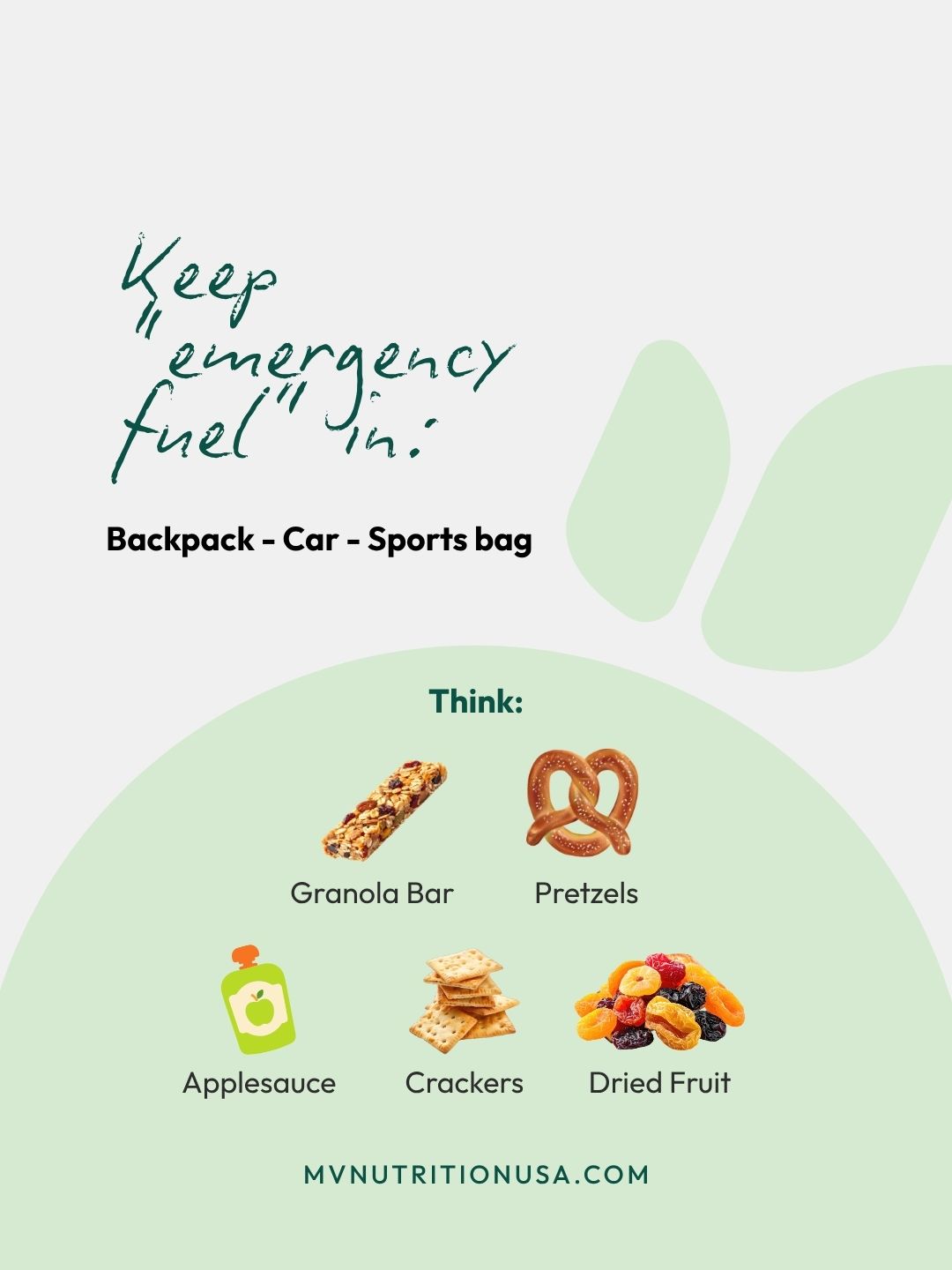
Keep backup food in: sports bags, backpacks, cars, parent bags.
Examples:
- Granola bars
- Pretzels
- Crackers
- Dried fruit
- Applesauce
- Nut butter packets
- Sports chews when appropriate
An emergency snack is much better than arriving at practice with nothing.
Hydration starts during school
Many young athletes try to solve an entire day of low fluid intake once practice starts. That is difficult. Encourage athletes to:
- Drink with breakfast
- Carry a water bottle
- Drink during lunch
- Drink before leaving school
- Continue drinking during practice
Long practices, tournaments, heavy sweating, or training in heat may require electrolytes in addition to water.
Hydration should be matched to the athlete and the environment.
What about tournament weekends?
Tournament days require even more planning because athletes may play multiple games with limited recovery time.
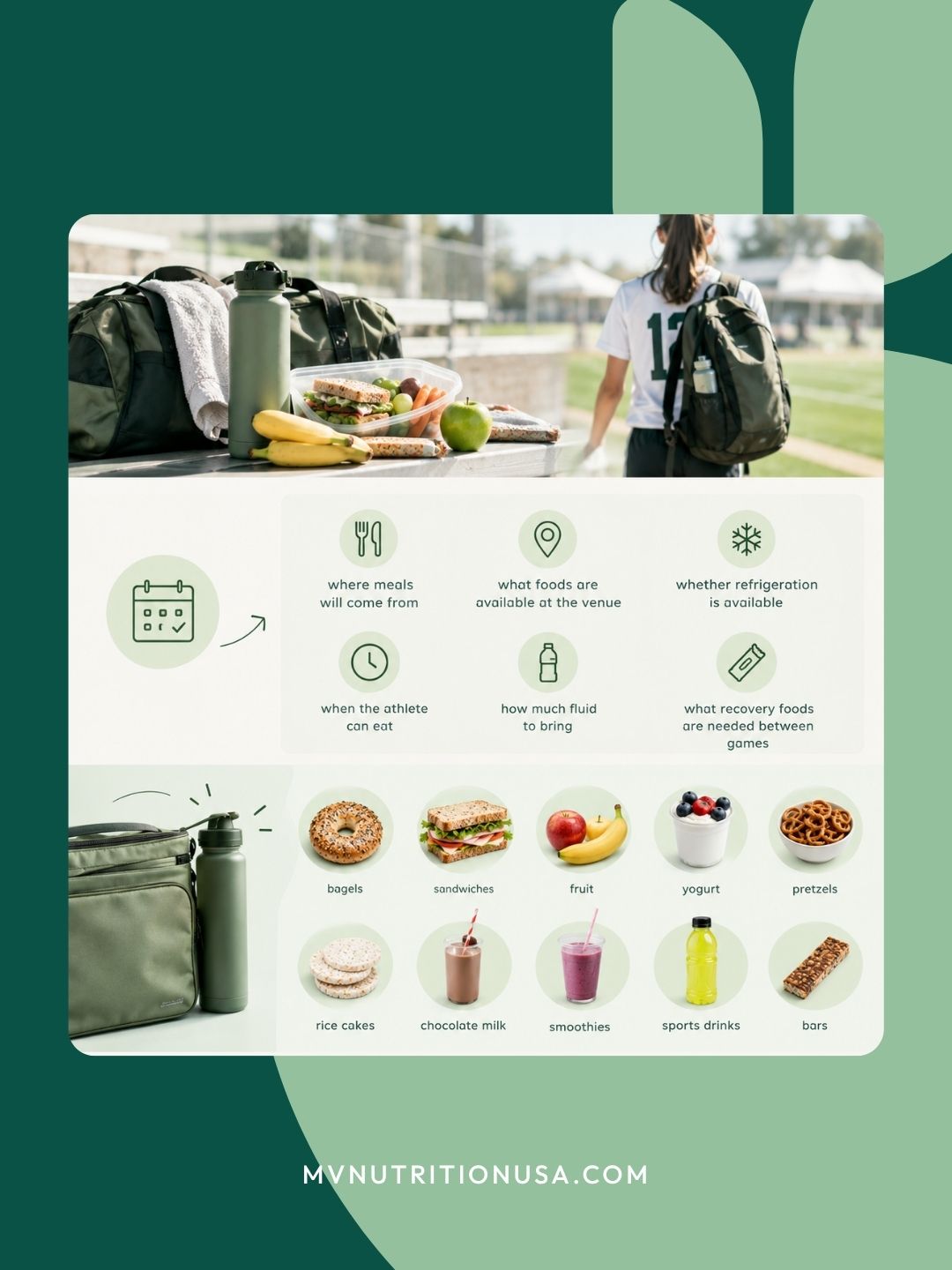
Families should know in advance:
- Where meals will come from
- What foods are available at the venue
- Whether refrigeration is available
- When the athlete can eat
- How much fluid to bring
- What recovery foods are needed between games
Portable options can include:
- Bagels
- Sandwiches
- Fruit
- Yogurt
- Pretzels
- Rice cakes
- Chocolate milk
- Smoothies
- Sports drinks
- Bars
Competition day is usually not the best time to experiment with unfamiliar foods.
How MV NUTRITION helps busy sports families?
At MV NUTRITION, our goal is not to give parents another complicated task. We build nutrition around the family’s actual life.
We review:
- School schedule
- Practice and game times
- Family meal patterns
- Food preferences
- Grocery access
- Travel
- Tournament schedules
- Hydration
- Current fueling gaps
- GI tolerance
- Recovery needs
Then we create practical strategies such as:
- Customized school-day fueling schedules
- Breakfast and lunch combinations
- Pre-practice and recovery snack lists
- Family meal ideas
- Grocery recommendations
- Tournament fueling plans
- Hydration strategies
- Travel nutrition plans
- Restaurant and convenience-food options
- Education for both parents and athletes
Instead of asking families to completely change how they live, we work with their existing routines and make nutrition easier to execute.
Final thoughts
Young athletes do not need perfect meals every day. They need consistency. A good school-year fueling plan makes sure there is food available:
- Before school.
- During school.
- Before training.
- After training.
- And during busy competition weekends.
The easier the system is, the more likely the family will actually follow it. If your family feels like every school night is a race between practice, homework, and dinner, MV NUTRITION can help turn your schedule into a practical fueling plan that supports both performance and family life.